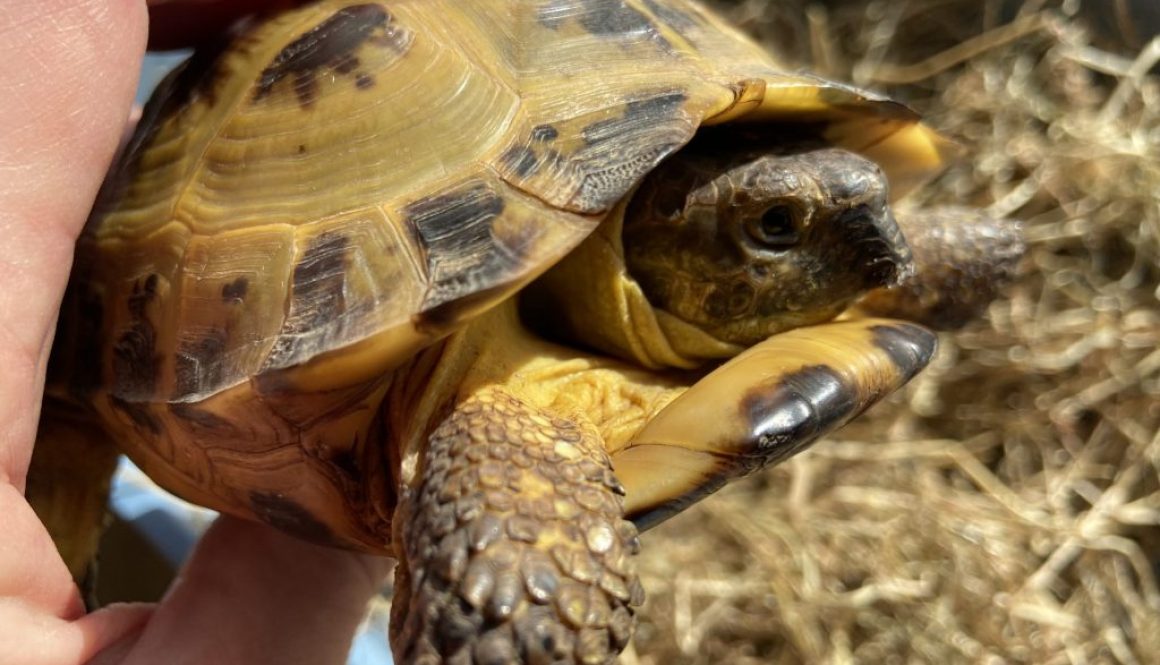
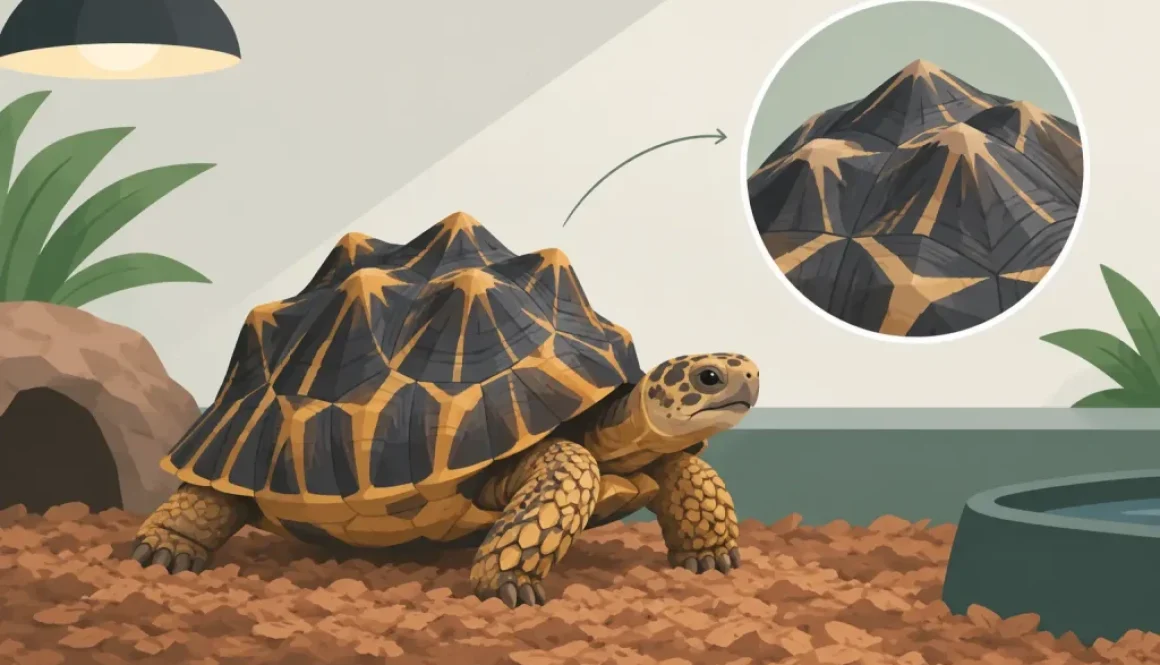
A young tortoise should not resemble a row of steep little hills. When each individual shell scute grows upwards rather than blending into a smooth dome, this is known as pyramiding. Owners often ask why tortoise shell pyramiding happens after noticing it in photographs or on a newly acquired animal. The short answer is that the shell has grown unevenly, usually because the tortoise’s everyday environment and diet have not met its needs during growth.
Pyramiding is not simply a cosmetic issue. It is a useful warning that care needs reviewing, particularly in growing tortoises. The good news is that, once the cause is addressed, future growth can often be flatter and healthier. Existing raised scutes will not suddenly become smooth, but good husbandry can prevent the problem becoming more severe.
Why tortoise shell pyramiding develops
A tortoise shell is living bone covered by keratin scutes. As a young tortoise grows, the shell needs the right balance of nutrition, hydration, warmth, light and exercise. If growth is too fast, too dry, or poorly supported, the centre of each scute can rise more than the edges. Over time, the shell takes on the characteristic pyramid appearance.
There is rarely one single cause. Pyramiding is more often the result of several small husbandry problems happening together over weeks or months. A tortoise kept too dry, offered food that is too rich, and unable to regulate its body temperature properly is at much greater risk than one issue alone would suggest.
This matters most for youngsters. Baby and juvenile Horsfield, Hermann’s and Marginated tortoises are growing rapidly, so mistakes show quickly. Adult tortoises can pyramid too, but their slower growth means the changes may be less dramatic.
The most common causes
A diet that is too rich or repetitive
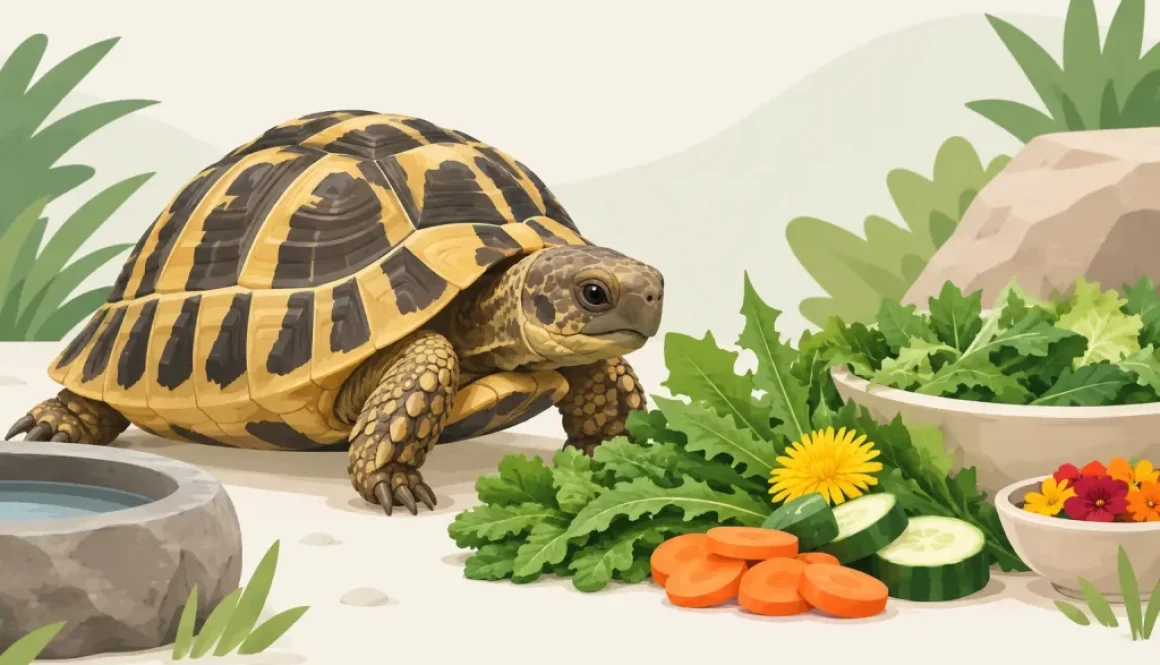
Overfeeding is a frequent contributor. Tortoises are not designed to eat large, rich meals every day. High-protein foods, fruit, pellets used as a main diet, and plentiful soft supermarket salad can encourage unnaturally fast growth. This includes well-meaning treats that are offered too regularly.
Most Mediterranean-type garden tortoises do best on a varied diet based mainly on suitable weeds and leafy plants, with good fibre content. The exact balance depends on species, age, season and health, but variety is valuable. Feeding the same food day after day is rarely ideal, even if that food is considered safe.
Calcium also has a part to play. A tortoise needs access to calcium for normal bone and shell development, but sprinkling excessive supplements onto an already unsuitable diet will not correct poor husbandry. Calcium, appropriate UVB exposure and correct temperatures work together. One cannot properly replace the others.
Insufficient hydration and overly dry conditions
Many people picture Mediterranean tortoises living permanently on dry, dusty ground. In reality, young tortoises often use humid microclimates in the wild, such as sheltered vegetation, burrows and soil beneath cover. A heated indoor table with dry substrate, no humid retreat and only a tiny water dish can leave a young tortoise chronically dehydrated.
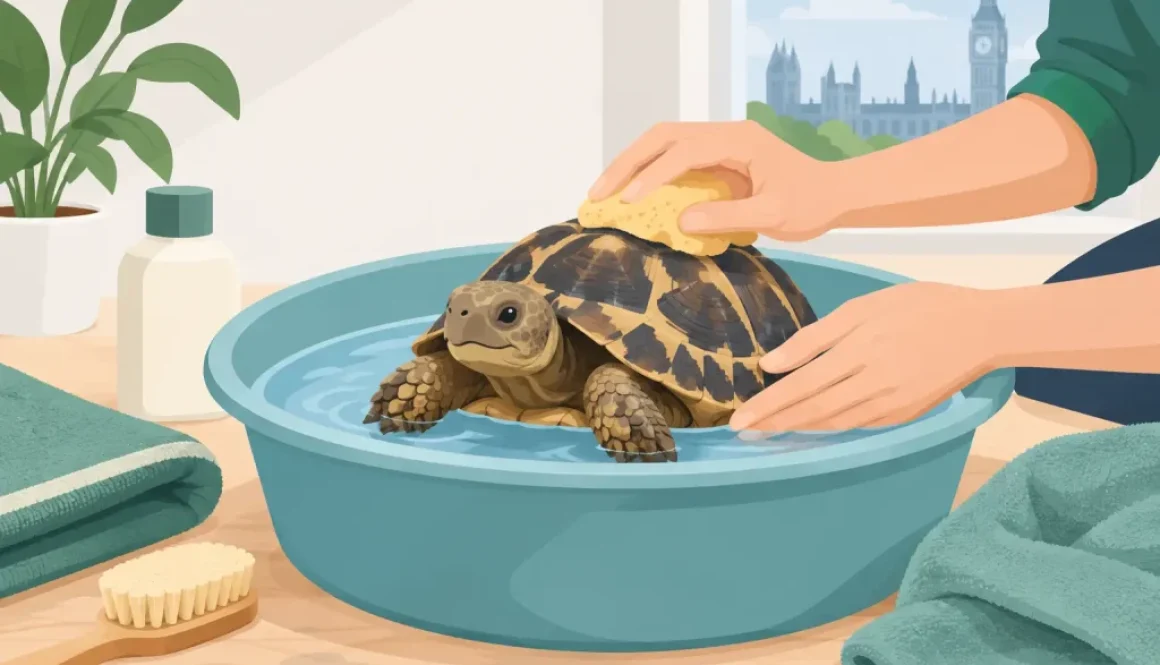
Dehydration is strongly associated with pyramiding. Fresh drinking water must always be available in a shallow, stable dish that the tortoise can enter and leave safely. Regular shallow baths are also useful for young tortoises, provided the water is warm rather than hot and the animal is supervised. Bathing supports hydration, but it should not be used as an excuse for a permanently dry enclosure.
A suitable humid hide or sheltered area can make a real difference for growing tortoises. This does not mean making the entire enclosure wet, cold or dirty. The aim is a clean environment with a sensible humidity gradient, allowing the tortoise to choose the conditions it needs.
Incorrect heat or UVB lighting
Tortoises rely on their enclosure to provide a proper temperature range. If they are kept too cool, digestion and normal body processes suffer. If the whole enclosure is too hot, they cannot move away to regulate themselves. A basking area, cooler zone and reliable thermostatic control are essential.
UVB lighting is equally important for indoor keeping. Without appropriate UVB, a tortoise cannot make effective use of vitamin D3 for calcium metabolism. Poor shell development, soft growth and other health concerns can follow. Lamps also lose useful UVB output over time, even when they still appear bright to the eye, so they must be replaced according to the manufacturer’s guidance.
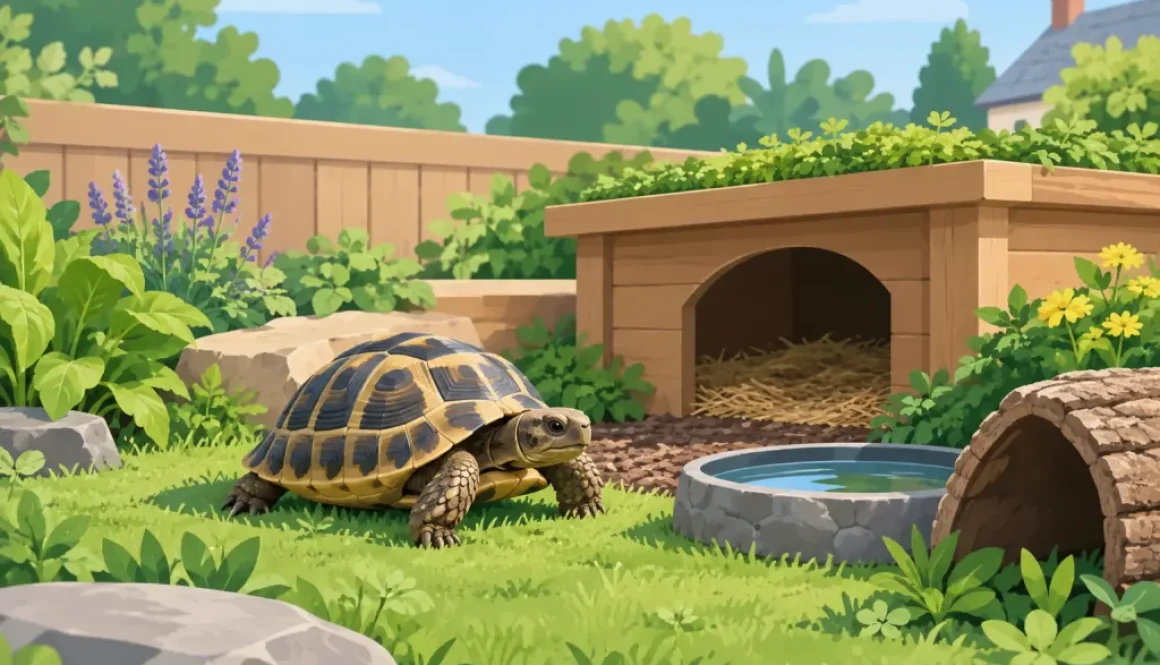
Natural sunshine in a secure outdoor enclosure is excellent when British weather allows, but it is not a complete year-round plan. Outdoor access must always include shade, water, protection from predators and escape-proof boundaries. Glass also filters much of the useful UVB, so placing a tortoise beside a sunny window is not the same as outdoor sunshine.
Lack of space, movement and natural behaviour
A small tortoise in a cramped enclosure cannot exercise, browse, explore or choose between warmer and cooler areas properly. Limited space may not be the only cause of pyramiding, but it can worsen the conditions that lead to it.
A well-planned enclosure should encourage gentle daily movement and offer cover, varied terrain and safe grazing where possible. Garden access is beneficial for many species during suitable weather, but each species has different tolerances. A Horsfield tortoise, for example, needs very secure boundaries because it is an enthusiastic digger.
Poor early care
Sometimes pyramiding began before a new keeper brought the tortoise home. It may be visible on an otherwise active, healthy-looking juvenile. This is one reason to choose a reputable specialist who can discuss the animal’s background, species requirements and current routine honestly.
Captive-bred tortoises should be raised carefully from the start. Asking questions before purchase is sensible, not awkward. Find out what the tortoise has been eating, its lighting and heating set-up, whether it has been regularly hydrated, and what paperwork is required for the species.
Can pyramiding be reversed?
The raised shell sections already present will not flatten completely. Shell is living tissue, but it does not remodel like a smooth layer of skin. However, a tortoise can still go on to have improved, more even growth once the underlying husbandry issues are corrected.
Do not try to file, trim or polish raised scutes. Do not apply oils in the hope of making the shell grow normally. These approaches do not solve the cause and may damage the shell or conceal changes that need monitoring.
Instead, take clear photographs from above and from the side every few weeks, ideally in the same light and position. Combined with regular weighing, this gives a more useful picture than relying on memory. A sudden change in appetite, lethargy, a soft shell, swelling, discharge, laboured breathing or a marked change in droppings needs prompt advice from a reptile-experienced veterinary surgeon.
A practical plan for smoother future growth
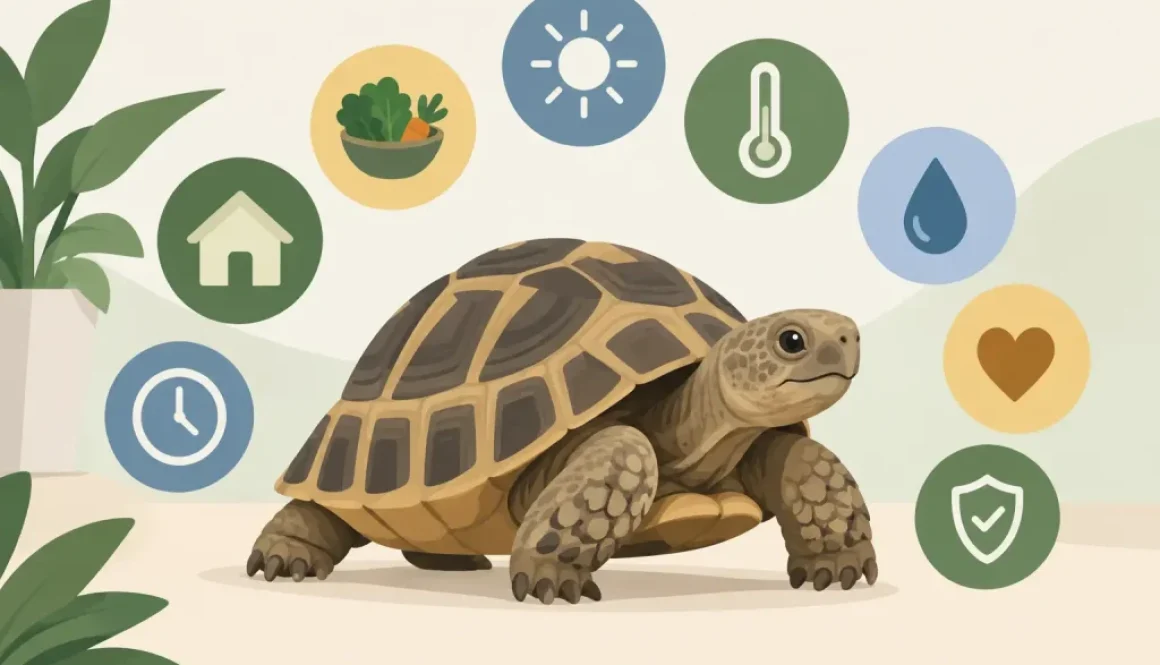
Start by reviewing the whole set-up rather than changing one thing at random. Check that the tortoise has a correctly sized enclosure, a measured basking temperature, a cooler area, an appropriate UVB lamp and a safe source of fresh water. Use accurate thermometers rather than guessing from how warm the enclosure feels.
Then look closely at feeding. Base meals around suitable, varied high-fibre plants for the species, avoid regular fruit and rich foods, and do not encourage rapid growth by offering more than the tortoise needs. A healthy tortoise is not necessarily the fastest-growing one.
Young tortoises deserve particular attention to hydration. Provide a humid refuge where appropriate, keep water accessible, and establish a sensible supervised bathing routine. The exact frequency can vary with the tortoise’s age, species, enclosure and health, so individual advice is worthwhile.
Finally, make changes steadily and observe the result. Replacing a lamp, improving the diet and altering the enclosure all at once can be necessary, but keep notes so you can see what is working. Consistent good care over months is more valuable than a short burst of effort.
When to ask for help
Mild pyramiding does not automatically mean a tortoise is unwell, but it should never be ignored. If the shell is soft, growth is very pronounced, the tortoise is losing weight, or you are unsure whether the species is being kept correctly, seek professional veterinary advice. A reptile-experienced vet can assess the shell, body condition and wider health rather than judging from one photograph.
For prospective owners, the best prevention begins before the tortoise arrives. Make sure you understand the species you are choosing, have the enclosure running and tested in advance, and ask for straightforward support when you need it. At Tortoises 4 You, our advice has always been based on helping keepers give captive-bred tortoises the stable, welfare-led start they deserve. A smooth shell is not achieved by a single product or quick fix, but by calm, consistent care every day.