Can Tortoises Eat Fruit? Safe Feeding Advice
A tortoise that eagerly takes a piece of strawberry is not necessarily telling you it needs one. Most pet tortoises will happily eat sweet food when given the chance, which is why the question, can tortoises eat fruit, needs a more careful answer than a simple yes or no.
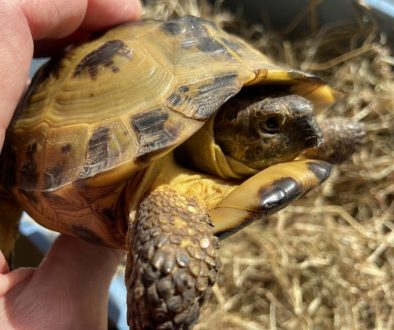
For the Mediterranean garden species commonly kept in the UK – including Horsfield, Hermann’s and Marginated tortoises – fruit should not form a normal part of the diet. A very small amount on an occasional basis is unlikely to cause harm to a healthy adult, but regular fruit feeding can lead to digestive and dietary problems that are entirely avoidable.
Can tortoises eat fruit safely?
They can eat certain fruits in tiny quantities, but they do not need fruit to thrive. The key point is that a tortoise’s natural diet is based largely on high-fibre, low-sugar wild plants and weeds. In the wild, a Hermann’s or Horsfield tortoise would spend much of its time grazing on fibrous leaves, flowers and stems, rather than finding bowls of soft, sugary fruit.
Fruit contains natural sugars and usually holds far more water than the wild foods these species are adapted to eat. Too much can upset the balance of gut bacteria, produce loose droppings and encourage a tortoise to reject the more suitable leafy foods it ought to be eating.
There is a difference between a tiny treat and a feeding habit. Offering a thumbnail-sized piece of suitable fruit once in a while is very different from adding fruit to the bowl every week. For young, growing tortoises, it is generally best not to offer fruit at all. Their diet should be kept particularly consistent and appropriate from the start.
Why fruit is not suitable as a staple food
Horsfield, Hermann’s and Marginated tortoises are adapted to a dry, fibrous diet. Their digestive systems are designed to make use of rough plant material, not concentrated sugar. Although fruit may look fresh and wholesome to us, it is not automatically the right food for a Mediterranean tortoise.
Frequent fruit feeding can cause soft stools or diarrhoea. It may also contribute to an unbalanced diet if the tortoise begins waiting for sweeter foods and leaves its weeds untouched. A poor diet over time can affect healthy growth, shell development and general condition.
The risk is not only about sugar. Soft fruit is filling without providing the sort of fibre a grazing tortoise needs. A diet based on supermarket salad, cucumber, tomato and fruit may appear varied, but it is often too low in fibre and too high in water to support long-term health.
Some tropical tortoise species have different dietary needs and may encounter more fruit in their natural habitat. That does not mean advice for tropical species should be applied to a Horsfield or Hermann’s tortoise. Always feed for the species you keep, rather than feeding what seems popular online or what another reptile will eat.
Which fruit can a tortoise eat occasionally?
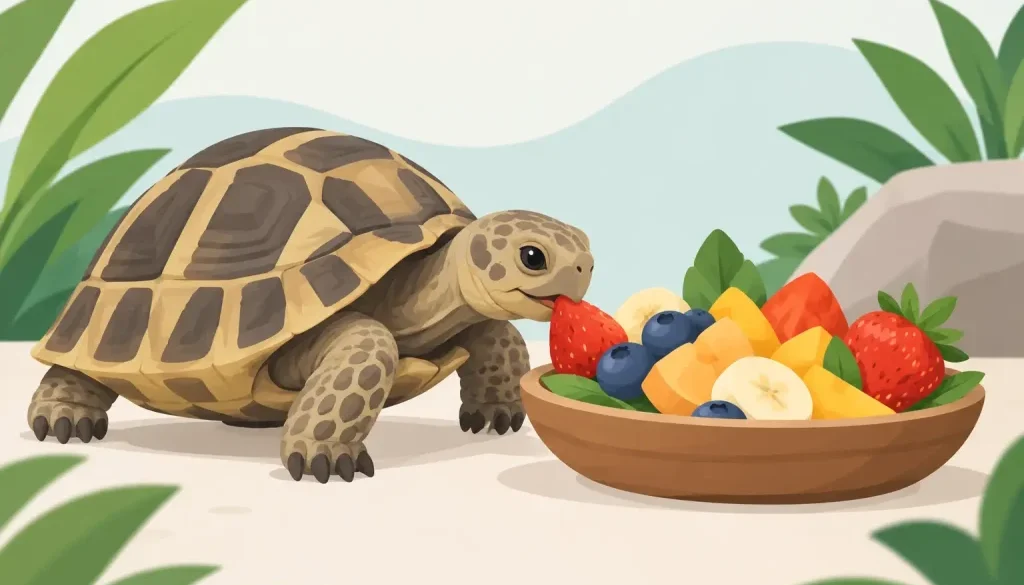
If you choose to give an established adult tortoise a rare treat, keep the portion very small and use plain, fresh fruit. A small piece of strawberry, raspberry, blackberry or apple can be offered occasionally. Remove apple pips and any hard or inedible parts first.
Fruit should be clean, ripe and free from added sugar, syrup, preservatives or seasoning. It should never replace a normal meal of weeds and leafy plants. Think of it as an exception, not a reward that is needed for good behaviour or bonding.
A sensible rule is to offer no more than a very small piece once every few weeks, if at all. If your tortoise develops loose droppings afterwards, do not offer it again and return to its usual high-fibre diet. A tortoise does not miss out by never being fed fruit.
Fruit and foods to avoid
Some foods are clearly unsuitable, while others are simply far too sugary or rich to be worthwhile. Avoid dried fruit completely. Raisins, dates, dried apricots and similar foods contain concentrated sugar and do not belong in a tortoise diet.
Banana, grapes, mango and melon are also best avoided because they are sweet and can easily become tempting favourites. Citrus fruits, such as oranges, lemons and grapefruit, are not suitable either. Their acidity and sugar content make them a poor choice for Mediterranean tortoises.
Do not feed avocado. It is not considered a safe food for tortoises and should be kept out of reach. Rhubarb should also be avoided. Never offer fruit stones, pips, processed fruit products, jam, fruit juice or tinned fruit. These bring no benefit and may create unnecessary risks.
It is worth remembering that tomato is technically a fruit, but that does not make it a useful staple. Small amounts are sometimes fed, yet tomatoes are watery and relatively low in useful fibre. There are much better foods available for a garden tortoise.
What should make up a healthy tortoise diet?
The best everyday diet for most Mediterranean pet tortoises is a varied selection of safe weeds, wild plants and leafy greens with good fibre content. Dandelion leaves and flowers, plantain, sow thistle, mallow, hibiscus leaves and flowers, chickweed and suitable bramble leaves are commonly used when correctly identified and collected from areas free from pesticides, traffic pollution and dog fouling.
Garden weeds are often much closer to a tortoise’s natural diet than shop-bought produce. However, correct identification matters. If you are unsure what a plant is, do not feed it. A good mixture is better than relying heavily on one type of leaf.
When fresh weeds are limited, especially during colder months, suitable leafy foods can help provide variety. Endive, escarole, lamb’s lettuce, watercress and spring greens can be useful parts of a mixed diet. Iceberg lettuce is too watery and offers little value, while spinach and other high-oxalate foods should not be regular choices.
A calcium supplement is usually needed, particularly for growing tortoises and egg-laying females. The correct amount depends on the tortoise’s age, diet, access to suitable UVB lighting and outdoor time. Fresh water must always be available in a shallow dish, even if you rarely see your tortoise drink.
Feeding fruit to young or newly arrived tortoises
Young tortoises need consistency. Their digestive systems are developing, and they need a steady supply of suitable high-fibre food and correct lighting, warmth and hydration. Fruit is unnecessary and may make it harder to establish good feeding habits.
The same applies to a newly arrived tortoise. Give it time to settle, learn where its food and water are, and become comfortable in its enclosure or secure outdoor space. Introducing treats too early can confuse appetite patterns and makes it harder to judge whether the animal is eating a proper diet.
If a tortoise has stopped eating, is losing weight, has persistent loose droppings or seems unusually quiet, do not try to tempt it with fruit. These signs can point to an issue with temperature, UVB provision, hydration, parasites, diet or illness. Check the husbandry conditions first and seek advice from a reptile-experienced vet where needed.
A simple approach to feeding your tortoise
For most UK keepers, the simplest approach is the safest one: make weeds and suitable leafy plants the daily food, provide calcium as advised, keep fresh water available and treat fruit as something your tortoise can do without. This supports natural grazing behaviour and avoids creating a preference for sugary food.
Good tortoise care is built from everyday choices rather than occasional treats. If you are unsure about a particular food or the diet for your species, ask before feeding it. At Tortoises 4 You, we would always rather help an owner establish the right diet early than have them correct preventable problems later.