Garden Tortoise Setup UK for Healthy Tortoises
A sunny patch of lawn is not, by itself, a suitable home for a tortoise. A proper garden tortoise setup UK keepers can rely on must protect against cold, escapes, predators and damp ground, while giving the tortoise room to graze, bask and behave naturally. Getting this right before your tortoise arrives makes ownership far more enjoyable and avoids the common problems we hear about every year.
For most UK keepers, the garden is an excellent summer space, but it is not a replacement for a correctly heated indoor enclosure during cooler weather. British summers can be warm one day and wet or chilly the next. Your setup needs to account for that reality.
Start with the right garden position
Choose the sunniest, best-drained part of the garden. A south-facing area is often ideal, provided there is also some shade available during the hottest part of the day. Avoid low ground where rain collects, areas beneath dripping trees, and places exposed to strong winds.
Tortoises need warmth from the ground as well as sunlight from above. Soil that remains wet and cold can contribute to respiratory problems and poor activity levels. If your garden is heavy clay or tends to become waterlogged, raise the enclosure slightly and improve drainage with a suitable free-draining substrate. A dry, natural surface is far preferable to a permanently muddy run.
Do not place the enclosure against a busy path, driveway or area used by dogs. Even a calm family dog may view a small tortoise as something to investigate. Foxes, rats and neighbourhood cats are also reasons to take security seriously, particularly with young tortoises.
Build a secure tortoise enclosure
A tortoise can climb, dig and squeeze through gaps more effectively than many new owners expect. The enclosure needs solid sides, not just a low decorative border. Smooth timber boards are commonly used because they prevent the tortoise seeing tempting territory on the other side, reducing pacing and escape attempts.
For an adult, provide as much floor area as your garden reasonably allows. A run of around 2 metres by 2 metres is a useful starting point for one small to medium Mediterranean tortoise, but more space is always beneficial. Hatchlings and very young tortoises should usually be kept in a smaller, carefully supervised outdoor pen rather than given free access to a large garden.
The walls should be high enough to prevent climbing and should extend below ground level or be secured with a buried edge to deter digging out. Corners can encourage climbing, so cover them, round them off, or add a simple inward overhang. A secure mesh lid is sensible for smaller tortoises and whenever the enclosure is unattended. It keeps out predators and prevents determined escapees from scaling the sides.
Never assume a fenced garden is tortoise-proof. Gaps under gates, holes in hedges and loose fence panels can quickly turn into a lost-tortoise search.
Include a dry sleeping shelter
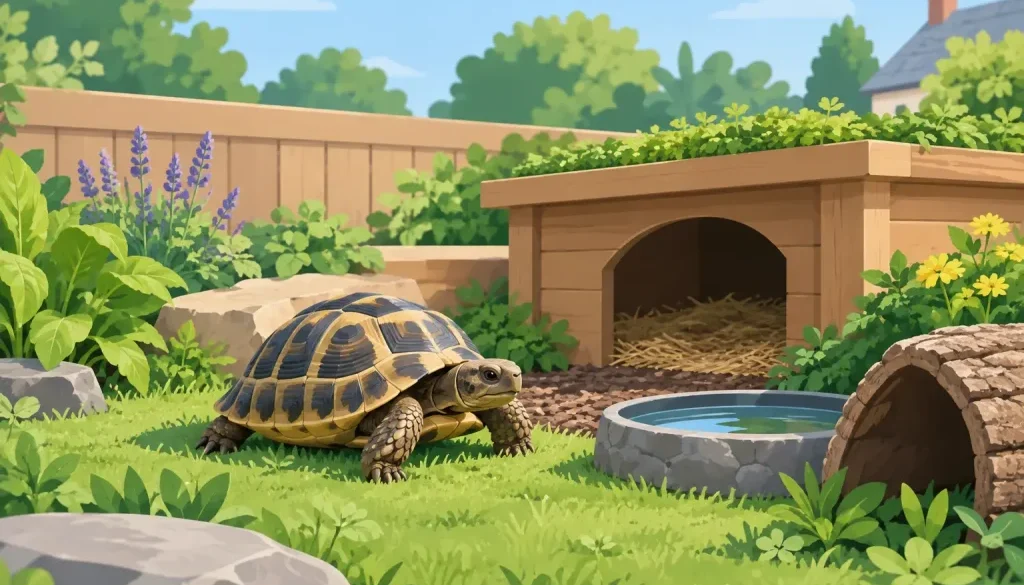
Every outdoor enclosure needs a dry, insulated hide. This can be a purpose-built tortoise house or a sturdy wooden shelter with a weatherproof roof. It should be large enough for the tortoise to turn around easily, but not so oversized that it loses warmth straight away.
Position the entrance away from the prevailing wind and keep the interior dry. A layer of clean, dust-free bedding can be used, but it must be changed if it becomes damp. The shelter is not a place to shut a tortoise outside overnight in unsuitable temperatures. It is a daytime refuge while the tortoise is using the garden in warm conditions.
Plant and prepare safe areas to graze
A well-planned garden run gives your tortoise opportunities to browse, explore and exercise. Many Mediterranean species enjoy a varied weed-based diet, including suitable dandelion leaves and flowers, plantain, sow thistle and other safe edible plants. Grass can be part of the environment, though it should not make up the whole diet for most pet tortoises.
Keep the planting simple and check every plant before allowing access. Many common garden plants are unsuitable or poisonous, including ivy, daffodils, tulips, foxgloves and buttercups. Do not rely on a tortoise instinctively avoiding toxic plants.
Avoid using slug pellets, weedkiller, lawn treatments or insecticides anywhere the tortoise may walk or eat. Chemicals can remain on plants and soil long after application. If a garden has recently been treated, use a separate untreated enclosure rather than taking a chance.
Provide a flat feeding slate or shallow dish for fresh food. This keeps food cleaner and can help naturally wear the beak as the tortoise feeds. Fresh water should always be available in a shallow, sturdy dish that allows easy access and exit. Change it daily, and make sure it cannot become a drowning risk for a very small tortoise.
Understand the limits of a UK outdoor setup
Horsfield, Hermann’s and Marginated tortoises may all benefit from safe outdoor time in suitable summer weather, but their needs are not identical. Horsfields are active diggers and need particularly secure boundaries. Marginated tortoises grow larger and need more space. Hermann’s tortoises enjoy browsing and varied terrain, but still require protection from cold and damp.
What they all have in common is that the UK climate is unpredictable. A tortoise that has stopped moving, feels cool, or retreats because the temperature has dropped needs to return to its indoor enclosure where correct heat and ultraviolet lighting are available. Do not leave a tortoise outdoors overnight simply because the day began warm.
A greenhouse or cold frame can provide a useful warm retreat for an established outdoor pen, but it must be ventilated and monitored. In direct sun, temperatures can rise dangerously quickly. It is not an automatic answer to British weather, and it does not remove the need for an indoor setup.
Supervision matters more than people think
Outdoor time is not completely hands-off, especially for young animals. Check your tortoise regularly for signs of overheating, attempts to escape, disturbed fencing or a sudden change in the weather. A tortoise can disappear under a shrub in minutes, and a shaded spot that seemed harmless in the morning may be cold and damp by afternoon.
We also recommend weighing your tortoise regularly and keeping a simple record. Consistent growth, appetite and activity are useful indicators that care is on track. If you notice lethargy, wheezing, nasal discharge, swollen eyes, poor appetite or unexplained weight loss, seek advice from a reptile-experienced vet promptly.
Legal paperwork and responsible purchasing
A garden setup is only one part of responsible ownership. Some tortoise species require specific legal documentation under CITES rules, including an Article 10 certificate where applicable. Protected specimens may also need microchipping once they reach the relevant size or weight.
Always buy a captive-bred tortoise from a reputable specialist and retain all paperwork safely for the animal’s lifetime. The documents should match the tortoise and be transferred correctly if ownership ever changes. This is not unnecessary form-filling – it protects the species and gives you confidence that your tortoise has been obtained legally.
At Tortoises 4 You, our advice is to prepare the indoor and garden areas before arranging delivery. With more than four decades of experience, we know that a few sensible checks at the start can prevent years of avoidable husbandry problems.
A garden that works with the weather
The best garden tortoise setup is not the largest or most expensive one. It is a secure, dry and sunny space that suits your tortoise’s age and species, with an owner ready to respond when the British weather changes. Build it carefully, keep it chemical-free, and let the garden become a valuable part of good daily care rather than a risk you hope will work itself out.