Do Tortoises Need Microchipping in the UK?
If you are buying a tortoise and the seller mentions paperwork, Article 10 certificates and microchips, it can all sound more complicated than it needs to be. The short answer to do tortoises need microchipping is this – some do, some do not, and it depends mainly on the species, the size of the tortoise, and whether legal certification is required.
For most buyers, the real concern is simple. You want to know that your tortoise is legal, correctly identified and being sold properly. That matters not only for peace of mind, but also because certain tortoise species are protected and cannot be sold lawfully without the right documents.
Do tortoises need microchipping for legal sale?
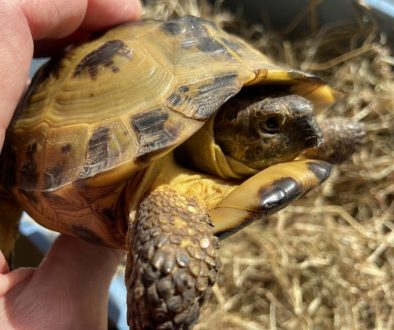
In the UK, microchipping is most often linked to protected species that need specimen-specific Article 10 certification. Many Mediterranean tortoises, including Hermann’s tortoises and Marginated tortoises, fall under rules where legal sale depends on proper identification and documentation.
A microchip is used to tie the tortoise to its paperwork. It helps prove that the animal described on the certificate is the animal being sold. For keepers, that gives an extra layer of protection. For sellers, it is part of demonstrating lawful and compliant trade.
That said, not every tortoise is microchipped from a very young age. Hatchlings and smaller juveniles may be too small for safe chipping. In those cases, identification can sometimes be based on clear photographs and other details until the tortoise reaches a suitable size. Once large enough, microchipping may then become necessary if the legal status of the species requires it.
So if you are asking whether every pet tortoise must be microchipped, the answer is no. If you are asking whether protected tortoise species often need microchipping as part of lawful sale and ownership records, the answer is very often yes.
Which tortoises need microchipping?
This is where buyers need to avoid general advice and look at the actual species being purchased. Horsfield tortoises are commonly treated differently from species such as Hermann’s tortoises or Marginated tortoises when it comes to certification and identification requirements.
For species covered by stricter wildlife trade controls, a specimen-specific Article 10 certificate may be needed for legal sale. Where that applies, permanent identification is often part of the process, and that usually means a microchip once the tortoise is large enough. Smaller individuals may be sold with photo identification if permitted, but that depends on the certificate conditions and the animal’s size.
This is why buying from an experienced specialist matters. The legal position is not something a new owner should have to guess. You should be told clearly whether the tortoise is chipped, whether it should be chipped later, and what documents come with it.
What size does a tortoise need to be before microchipping?
There is no sensible one-size-fits-all answer, because tortoises vary by species, build and age. The general principle is welfare first. A tortoise should be large enough for the procedure to be carried out safely by a competent veterinary professional.
In practice, very small hatchlings are usually not chipped. It is far more common for young tortoises to be identified by photographs until they grow on. Once they reach an appropriate size, a microchip can then be implanted and linked to their certificate if required.
If you are buying a younger tortoise, ask two practical questions. Is this tortoise already microchipped, and if not, will it need microchipping later? A proper seller should be able to answer both without hesitation.
Does microchipping hurt a tortoise?
Owners often worry about this, and understandably so. A microchip is inserted under the skin using a needle, so there is some momentary discomfort, but the procedure is routine when carried out correctly. For a healthy tortoise of suitable size, it is generally straightforward.
The bigger concern is not whether the process takes a few seconds, but whether it is being done at the right stage and by someone experienced. Chipping a tortoise too small is not good practice. Waiting until the tortoise is large enough is the sensible approach.
Once implanted, the chip itself should not interfere with normal day-to-day life. It simply provides a permanent identification number that can be scanned and matched to the relevant documents.
Why microchipping matters beyond the law
Most people first hear about microchipping because of legal paperwork, but there is a practical side too. A microchip creates a more reliable link between the tortoise and its certificate than photographs alone, especially as markings can become harder for an inexperienced eye to compare over time.
It also helps if ownership details ever need checking. If a tortoise is sold on in the future, or if there is any question over identity, the chip provides a fixed point of reference. That is useful for breeders, keepers and enforcement authorities alike.
The wider benefit is that proper identification supports responsible trade in captive-bred tortoises. It helps separate genuine, legally bred animals from those that should not be in circulation. For anyone buying a tortoise as a family pet, that may sound remote, but it is exactly why paperwork and identification are taken seriously.
What paperwork should come with a microchipped tortoise?
If the species requires it, the most important document is the Article 10 certificate. This should match the individual tortoise being sold. If the tortoise is microchipped, the chip number should correspond with the certificate details.
You should also receive clear information from the seller about the species, hatch date or approximate age, and any relevant husbandry guidance. A decent specialist will not simply hand over a tortoise and a sheet of paper. They should explain what the documents mean and what you need to keep safe.
Never assume that a tortoise is legal just because someone says it is captive bred. Ask what documentation is included and whether the animal is microchipped. If the answers are vague, that should set alarm bells ringing.
Buying a young tortoise – what should you ask?
If you are purchasing a juvenile tortoise, the conversation is often more important than the advert. Ask whether the species needs Article 10 certification, whether the tortoise has been photograph-identified or microchipped, and whether any later action will be needed as it grows.
This is especially relevant for first-time keepers. Many buyers assume that if a tortoise is small, no legal detail can apply yet. That is not always the case. The form of identification may differ at that stage, but the compliance side still matters.
At Tortoises 4 You, this is the sort of point that should be explained before purchase, not discovered afterwards. Buyers need straightforward advice, not guesswork.
Do tortoises need microchipping if they are not being sold?
Usually, the issue becomes most important when sale, transfer or certification is involved. A privately kept tortoise that does not require specimen-specific sale documentation is a different matter. But even then, species and legal status still matter, so broad assumptions are risky.
If you already own a tortoise and are unsure about its paperwork, the best step is to identify the species properly and check what documentation exists. If you plan to sell it later, the identification requirements may become more relevant at that point.
This is one of those areas where doing things properly early on saves trouble later. A tortoise can live for decades. It is worth having its legal position clear from the start.
The simplest way to think about it
Microchipping is not a blanket rule for every tortoise in every situation. It is a legal and practical identification tool used mainly where protected species and sale certification require it. For very young tortoises, photo identification may be used first. For older or larger specimens, a microchip is often the correct and necessary next step.
For buyers, the key is not memorising every regulation. It is making sure the tortoise comes from a knowledgeable, compliant seller who can explain exactly what applies to that individual animal. If the paperwork is clear and the advice is sound, you can focus on giving your tortoise the right home and care, which is where your attention should be in the first place.