Tortoise Table Versus Vivarium for UK Keepers
A tortoise enclosure can look tidy and well equipped yet still be wrong for the animal living in it. When considering a tortoise table versus vivarium, the main question is not which looks best in the house. It is which set-up provides safe heat, UVB, fresh air, enough floor space and a proper temperature gradient for your tortoise.
For most young garden tortoises kept indoors in the UK, a tortoise table is usually the more practical starting point. A vivarium can be adapted successfully in some circumstances, but it needs careful ventilation and enough usable floor area. The right choice depends on the tortoise’s species, size, age and the room where it will be kept.
Tortoise table versus vivarium: the key difference
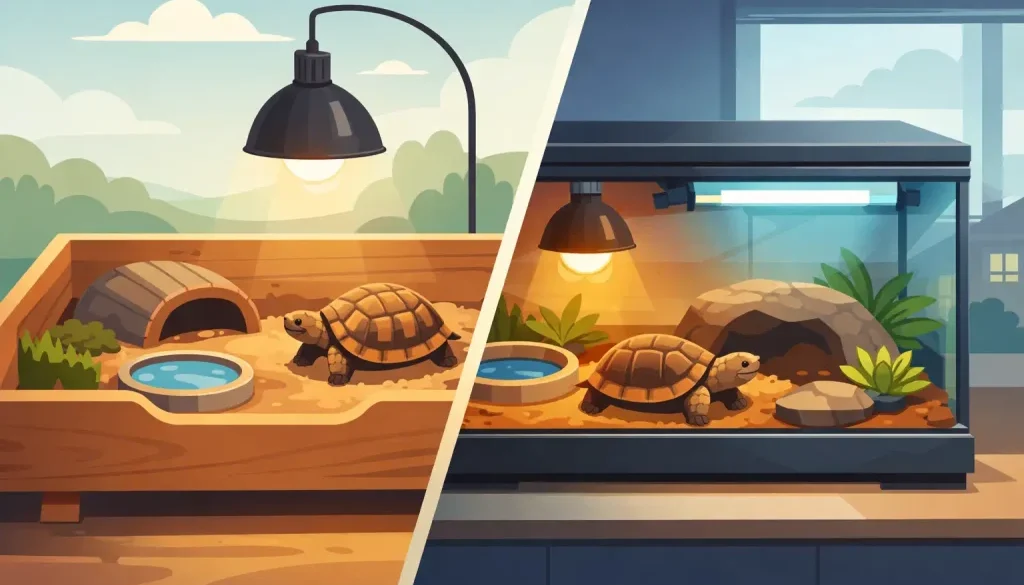
A tortoise table is an open-topped enclosure with solid sides. It is designed around floor space, allowing the tortoise to walk between a warm basking end and a cooler end. The open top also provides good airflow, which is particularly useful for Mediterranean species such as Hermann’s, Horsfield and Marginated tortoises.
A vivarium is normally an enclosed wooden unit with sliding glass doors at the front. It was originally designed for reptiles that benefit from retaining more heat and humidity. It can look smart, keep substrate contained and help prevent other pets or small children from reaching the tortoise. However, the enclosed design can make it easier for stale air, excess humidity and overly warm temperatures to build up.
Neither enclosure is automatically good or bad. The details matter far more than the label on the product.
Why a tortoise table suits many UK homes
For a young tortoise, an open table makes it easier to create a natural temperature gradient. The basking lamp is positioned at one end, with a cooler retreat at the other. Your tortoise can then choose where it needs to be, rather than being kept at one temperature throughout the enclosure.
Good ventilation is another major advantage. Garden tortoises are not tropical animals. Although they need access to warmth and, for youngsters, should not be allowed to become chilled, they also benefit from fresh air and a dry environment. A table reduces the risk of damp, stagnant conditions that may contribute to respiratory problems or poor shell condition.
Tortoise tables are also straightforward to clean and observe. You can see whether your tortoise is eating, basking, soaking or hiding without opening doors and disturbing it. This is especially helpful for first-time keepers learning what is normal behaviour.
The drawback is that tables lose heat more readily than enclosed vivariums. In a cold room or a draughty house, the ambient temperature around the enclosure may be too low, particularly overnight. The answer is not simply to cover the whole table tightly, as this can reduce ventilation. Instead, keep the enclosure in a suitable room away from radiators, cold windows and draughts, and use correctly controlled heating where necessary.
When a vivarium can work
A suitably large vivarium can provide a secure indoor home, especially where household pets, young children or limited floor space make an open table difficult. The enclosed sides can also help maintain a stable temperature in a cooler property.
That said, a standard small vivarium sold for reptiles is rarely suitable for a tortoise. Tortoises need walking room, not climbing height. A tall enclosure with a small footprint may appear spacious to us but gives the animal little opportunity to exercise or move away from the heat.
If you choose a vivarium, select one with generous floor dimensions, effective low and high-level ventilation, and room for a basking area, feeding slate, water dish and separate hide. The lighting and heat equipment must be safely fitted, guarded where appropriate and controlled by a thermostat. Check temperatures at tortoise height, not just near the roof of the enclosure.
You will also need to watch humidity carefully. Condensation on the glass, a wet substrate or a persistent musty smell are signs that the environment needs attention. For the Mediterranean garden tortoises commonly kept in Britain, a damp vivarium is not a healthy substitute for an outdoor environment.
Floor space matters more than height
Whether you choose a table or vivarium, do not buy the smallest enclosure your tortoise will physically fit into. Young tortoises grow, and a cramped set-up soon becomes unsuitable. More floor space gives them room to explore, exercise, thermoregulate and behave naturally.
A very small hatchling may initially be kept in a smaller, closely monitored enclosure, but this should not become a permanent arrangement. Plan ahead for an upgrade rather than purchasing housing twice in quick succession. A species such as a Marginated tortoise will need substantially more room as it grows than a small Western Dwarf Hermann’s, while an active Horsfield also needs enough space to investigate, dig and move about.
Height has a role too. The sides must be high enough to prevent escape and to keep substrate inside, but excessive height is not a benefit if it replaces valuable floor area.
Lighting, heat and UVB are not optional extras
The enclosure itself does not keep a tortoise healthy. The equipment inside it does much of the work. Young tortoises need a suitable basking lamp to create a warm zone and a quality UVB source to support normal calcium use and shell development. Natural sunlight outdoors is excellent when conditions are safe and suitable, but glass filters useful UVB, so a sunny windowsill is not an alternative to proper lighting.
Use a thermometer at each end of the enclosure and check the basking area regularly. The precise temperature needed will vary with the species and the equipment being used, so take advice for your particular tortoise rather than copying a random set-up from social media. A thermostat is essential with suitable heat sources and provides protection against overheating.
Lighting should be positioned to create a clear basking zone without forcing the tortoise to sit directly beneath an unprotected lamp. There must always be a cooler area and a hide where it can rest. Never place electrical fittings where they can get wet from the water bowl or soak area.
Substrate, water and daily care
A table and a vivarium can both fail if the substrate is wrong. Avoid loose wood chips, scented products, sand-only substrates and anything likely to be swallowed or create dust. The aim is a natural, safe surface that allows some digging without staying wet and cold.
Provide a shallow water dish that the tortoise can enter and leave easily. Fresh water should be available every day, and young tortoises should also be soaked regularly as part of their routine care. Food is best offered on a slate, tile or similarly cleanable surface rather than directly on the substrate.
Daily checks should be simple: confirm the lamp is working, check temperatures, remove old food, refresh water and look at your tortoise. A healthy youngster is not necessarily active all day, but changes in appetite, movement, eyes, breathing or droppings are worth taking seriously.
The best indoor enclosure is only part of the picture
A tortoise table is generally the easier choice for a first-time keeper because it offers airflow, clear access and a sensible layout for heat and UVB. A large, properly ventilated vivarium may suit certain homes, but it requires more attention to prevent overheating and dampness.
Whichever you choose, remember that indoor housing is not a replacement for a secure outdoor area when the weather is suitable. Garden tortoises benefit greatly from natural sunlight, space and grazing opportunities under supervision in a predator-proof enclosure. Indoor accommodation is where careful husbandry begins, not where it ends.
At Tortoises 4 You, we have spent over four decades helping keepers choose captive-bred tortoises and understand the practical care they require. Before bringing a tortoise home, make sure its enclosure is fully set up, tested and warm for several days. A little preparation gives your new tortoise the calm, safe start it deserves.