Captive Breeding: Why It Matters for Pet Tortoises
A young tortoise may look small enough to fit in one hand, but choosing where it has come from affects the animal for the rest of its life. Captive breeding means a tortoise has been bred and hatched in managed care rather than taken from the wild. For a UK keeper, that is the proper starting point: it supports welfare, gives clearer legal provenance and usually makes it easier to obtain accurate advice about the species you are bringing home.
At Tortoises 4 You, we have spent 44 years dealing with garden tortoises and helping owners make sensible decisions before they buy. A tortoise is not a short-term pet. With correct care, many species can be part of a family for decades. Starting with a healthy, properly documented captive-bred animal is one of the most responsible choices a new owner can make.
What captive breeding actually means
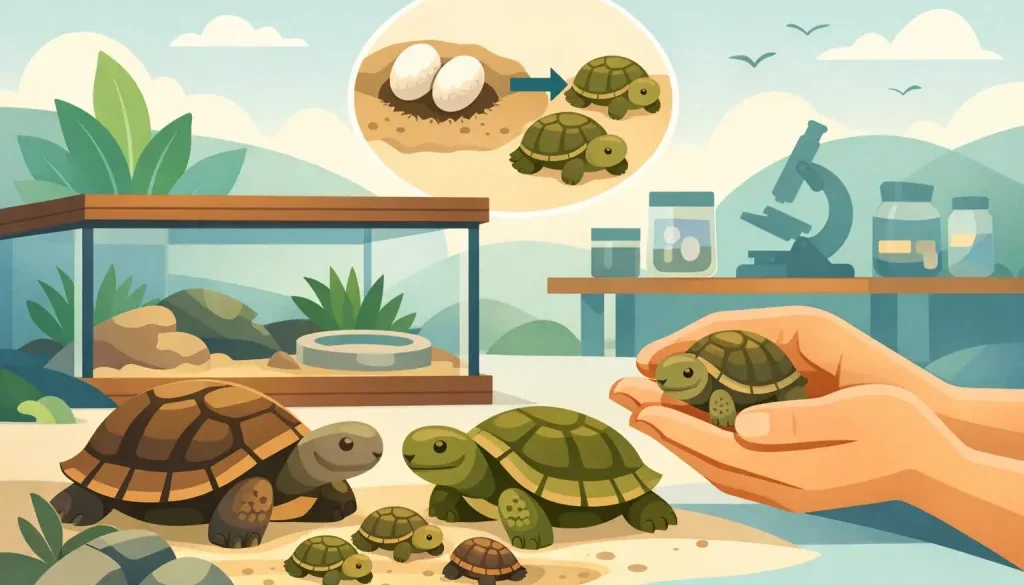
Captive-bred tortoises are produced by parent tortoises kept in controlled, welfare-conscious conditions. Their breeding, hatching and early development can be monitored, rather than guessed at after an animal has entered the pet trade. A responsible breeder or specialist should be able to give clear information on the species, age or hatch year, care routine and, where relevant, the animal’s legal documents.
This is different from a wild-caught tortoise. Wild collection can put pressure on already vulnerable populations and involves an animal being removed from an environment it knows. Wild-caught reptiles may also arrive carrying parasites, stressed by transport, or poorly suited to the conditions offered by an inexperienced keeper. They can be harder to assess because their history is often uncertain.
Captive-bred does not mean a tortoise will look after itself or arrive fully grown. Young tortoises still need the right enclosure, lighting, heat, diet and regular observation. What it does mean is that their start in life has been more controlled, traceable and suited to responsible ownership.
Why captive breeding matters to tortoise welfare
Good welfare begins long before delivery day. Breeding adults need suitable space, nutrition, temperatures and nesting areas. Hatchlings need careful incubation, hydration, appropriate UVB provision and a species-correct diet. When those foundations are sound, a young tortoise has a better chance of developing steadily.
There is no such thing as a completely maintenance-free tortoise. Even a healthy captive-bred youngster can become unwell if it is kept too cold, fed unsuitable foods or housed without proper UVB lighting. However, buying from a specialist who knows the individual species gives you a clearer route into correct care. You should be able to ask practical questions and receive straight answers, not simply be handed a box and left to work it out.
Species matters here. Horsfield tortoises, Hermann’s tortoises and Marginated tortoises each have different adult sizes, temperaments and housing considerations. The rarer Western Dwarf Hermann’s tortoise may suit some keepers because of its smaller size, but it still needs committed, informed care. The best species is not always the smallest available or the one that looks most appealing online. It is the one you can house and care for properly over its lifetime.
A healthier start is not a guarantee
It is fair to be realistic. Captive breeding reduces several avoidable concerns, but it cannot guarantee that a tortoise will never need veterinary attention. Reptiles can hide illness well, and husbandry mistakes can have serious consequences. A good supplier will be honest about this and encourage owners to prepare before collection or delivery.
Before your tortoise arrives, have the enclosure fully set up and tested. Check that temperatures are stable, the UVB equipment is suitable and the feeding area is ready. This avoids the common problem of trying to buy vital equipment after the animal is already at home.
Captive breeding and UK legal paperwork
For protected tortoise species, legality is not an optional extra. Certain species are covered by CITES controls, and the paperwork required depends on the animal, its species and its status. In some cases, a specimen-specific Article 10 certificate is needed before a tortoise can be sold legally. Microchipping may also apply where required under the relevant rules.
The important point for a buyer is simple: ask what documentation comes with the tortoise and keep it safely. Do not assume that a vague statement such as “captive bred” is sufficient proof for every protected species. A reputable specialist will explain what paperwork applies to the individual animal and provide the appropriate documents where required.
Keep certificates with your household records rather than treating them as packaging. If you later move home, need to show provenance, or pass the tortoise on through the proper route, those records matter. Never buy a protected tortoise without being satisfied that its sale is lawful and that its history is clear.
How to choose a responsible captive-bred tortoise
Price alone is a poor way to choose a tortoise. An unusually cheap animal can become expensive and upsetting if its health, history or paperwork is uncertain. Look for a specialist who is prepared to discuss the animal, the species and your intended setup before taking payment.
A responsible seller should be comfortable talking through diet, housing, heating, UVB and delivery arrangements. They should also make clear whether the tortoise is suitable for a first-time keeper. Personal advice is particularly valuable for families, because children may be excited by a new pet while an adult must remain responsible for its daily care.
When speaking to a seller, ask about the tortoise’s hatch year, current diet and how it has been housed. Ask what documentation is supplied, whether the animal has any particular care requirements and what size it is likely to reach. These are sensible questions, not difficult ones. Clear, confident answers are a good sign.
It also helps to consider your home honestly. Garden tortoises need secure accommodation and cannot simply be left to roam outdoors in the British weather. They need protection from predators, overheating, chilling and escape. Indoor and outdoor arrangements vary by species, age and season, so advice should be tailored rather than copied from a general care sheet.
The wider value of responsible breeding
Captive breeding can reduce demand for animals taken from the wild, but it is not automatically beneficial in every circumstance. It must be carried out with proper attention to animal welfare, health, genetic management and legal controls. Poor breeding practices, overcrowding or selling animals to unprepared owners do not serve tortoises or conservation.
That is why responsible retailing matters as well as responsible breeding. The right outcome is not merely selling a tortoise. It is placing the right tortoise with an owner who understands the commitment and has the setup ready. For some households, waiting until they have more space, time or budget is the best decision.
A well-chosen captive-bred tortoise can be a wonderful long-term companion, full of character and routine. Take time to ask questions, prepare its home properly and retain every piece of relevant paperwork. A careful start gives both you and your tortoise the best chance of many healthy years together.