Can Tortoises Live Outside in the UK?
If you are asking can tortoises live outside UK conditions, the short answer is yes – but not all year round, and not without proper planning. This is one of the most common questions we hear from new keepers, especially families who picture a tortoise happily wandering a sunny garden. That can be part of good tortoise keeping in Britain, but only when the species, setup and weather all work together.
In the UK, outdoor keeping is best thought of as seasonal rather than permanent. Our climate is unpredictable. A warm spell in May can be followed by cold rain and strong wind a day later. Tortoises do benefit from fresh air, natural sunlight and safe access to weeds and grazing, but they still need protection from cold, damp and sudden temperature drops.
Can tortoises live outside UK gardens safely?
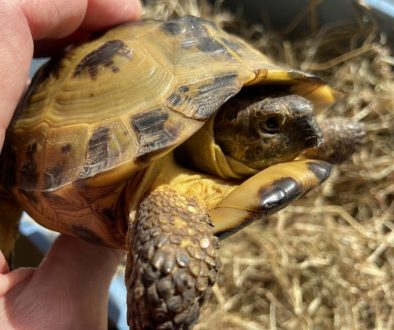
Yes, many Mediterranean species can spend time outdoors in UK gardens during suitable weather. Horsfield tortoises, Hermann’s tortoises and Marginated tortoises are often kept outside through the warmer months, provided they have a secure enclosure, dry shelter and access to heat when needed. The mistake some new owners make is assuming that because a tortoise is hardy, it can simply be put in the garden and left to manage.
That is not how good husbandry works. British weather changes too quickly, and tortoises are entirely dependent on their environment to regulate body temperature. If they cannot warm up properly, they will not digest food well, may become inactive and can become unwell.
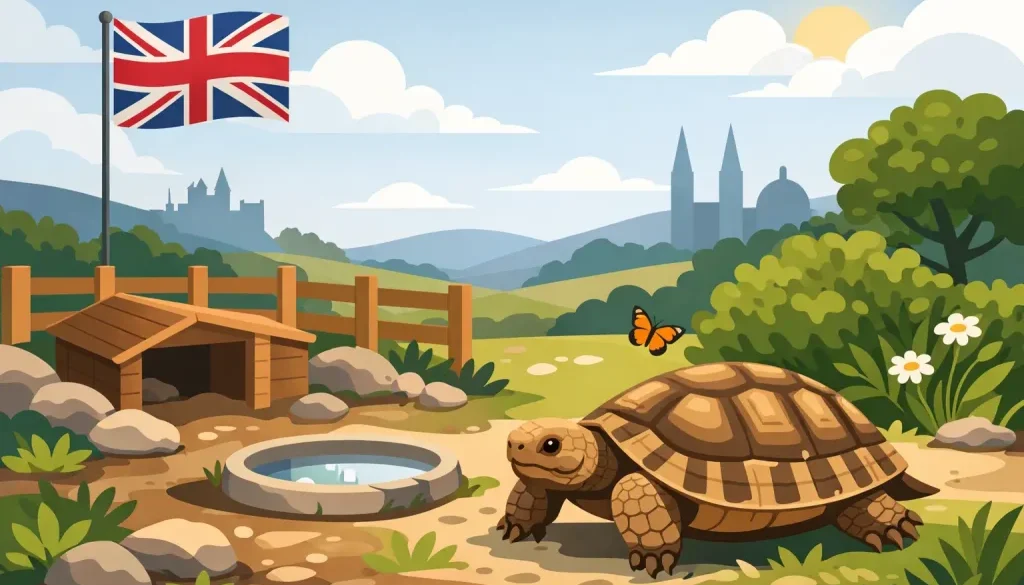
A tortoise kept outdoors in the UK needs more than grass and a fence. It needs an enclosure designed for tortoises, not for rabbits or guinea pigs. It needs dry ground, sunny areas, shaded areas, wind protection and a proper hide. In many cases, it also benefits from a heated house or insulated shelter so it can warm itself safely at the start and end of the day.
Which tortoises do best outdoors in the UK?
This depends on species, age and the way they are kept. Mediterranean tortoises are generally the best candidates for outdoor living during good weather in Britain. Hermann’s tortoises and Marginated tortoises usually do well with a suitable outdoor pen in spring and summer. Horsfields can also enjoy outdoor life, but they are enthusiastic diggers, so security is especially important.
Young tortoises need more care than established adults. Hatchlings and very small juveniles are more vulnerable to cold, wet conditions and temperature swings. For that reason, many keepers use a mixed approach. The tortoise spends warm days outdoors and comes back into a controlled indoor enclosure when conditions are not right.
That mixed setup is often the most sensible option for UK owners. It gives the animal the benefits of natural sunlight and outdoor activity without exposing it to unnecessary risk.
The real issue is not outside or inside – it is temperature and dryness
People often frame the question too simply. The better question is whether your tortoise can stay warm, dry and secure outside on that particular day. A hot, bright July afternoon is very different from a grey, damp morning in early September.
Tortoises need to bask and raise their body temperature. In the UK, sunshine alone is not always enough, even in summer. Air temperature, ground temperature, wind chill and damp all matter. A garden may look pleasant to us while still being too cool for a tortoise to function properly.
Dryness matters just as much. Constantly wet ground, long damp grass and muddy shelters are poor conditions for Mediterranean species. They are not built for life in prolonged cold and wet weather. Respiratory issues are more likely when tortoises stay chilled and damp for too long.
That is why outdoor housing should include a dry hide and, ideally, a raised or well-drained area. If a pen turns boggy after rain, it needs improving. A tortoise should not be sitting in wet soil day after day.
How to set up an outdoor enclosure properly
A safe outdoor tortoise enclosure in the UK should be secure from escapes and predators, while also offering a choice of microclimates. Tortoises need to move between warmth, shade, shelter and open ground. One flat patch of lawn is not enough.
Solid sides are usually better than wire at tortoise level because many tortoises pace along visible boundaries. The enclosure should be large enough to encourage walking and grazing. The base and edges must prevent digging out, especially with Horsfields. Protection from dogs, foxes and birds is also important, particularly for young tortoises.
Inside the enclosure, include dry soil, edible weeds, a sheltered hide and basking areas that catch the sun. Some keepers add a small cold frame or tortoise house to trap warmth. In UK conditions, that can make a real difference. On cooler days, a heated tortoise house can provide a safe retreat and extend the time your tortoise can spend outdoors.
Water should always be available in a shallow dish, and the enclosure should be checked daily. Outdoor keeping is not lower maintenance. In many ways, it requires more observation because the weather does not stay constant.
When is it too cold for a tortoise outside?
There is no single temperature that suits every situation, because sunshine, shelter and species all play a part. Still, if the day is dull, cold, wet or windy, outdoor time is usually limited or best avoided. Tortoises need enough warmth to become active and feed properly. If they are sitting still, tucked in and unable to bask, the conditions are probably not good enough.
Morning and evening are often the problem periods in Britain. Even after a warm day, temperatures can fall quickly. A tortoise left out too late may struggle to stay warm overnight unless it has access to a properly heated shelter.
This is where experience matters. Good keepers do not rely on the calendar. They watch the actual conditions. A sunny day in April may be suitable for supervised outdoor time, while a miserable day in August may not be worth it.
Can a tortoise live outside all year in the UK?
For most pet tortoises, the honest answer is no, not in the usual sense. The UK is not warm enough or dry enough for year-round outdoor living without serious provision. Adult Mediterranean tortoises may brumate, but that is a separate part of husbandry and should not be confused with simply leaving a tortoise outside through autumn and winter.
Brumation must be managed carefully and only with healthy tortoises of suitable age and weight. It is not something to attempt casually. Outside of that, most keepers in Britain use indoor accommodation for colder periods and make the most of outdoor time when conditions improve.
For first-time owners, this balanced approach is usually best. It gives you control when the weather is poor and flexibility when the garden is suitable.
Common mistakes with outdoor tortoise keeping
The most common mistake is assuming summer in the UK is reliably warm enough. It is not. Another is using the wrong enclosure. Open-topped runs sold for small pets are often insecure, too exposed and too damp for tortoises.
Feeding on ordinary lawn alone is also a problem. Tortoises need the right diet, with suitable weeds and plants rather than reliance on grass or supermarket salad. Then there is the legal and welfare side. Buying the right species from a specialist matters because healthy, captive-bred tortoises with correct paperwork and proper support give you a far better starting point.
At Tortoises 4 You, we have spent decades advising keepers on exactly these day-to-day questions, and outdoor housing is one of the areas where straightforward advice saves a lot of trouble later on.
The best approach for most UK owners
For most people in England and Wales, the best answer is simple. Let your tortoise enjoy the garden when conditions are genuinely suitable, but do not rely on the British climate to do all the work for you. A secure outdoor pen for warm days, backed up by proper indoor or heated accommodation, is usually the safest and most practical arrangement.
That gives your tortoise what it needs rather than what we might prefer to imagine. Fresh air and sunshine are excellent, but not at the expense of warmth and safety. If you choose a suitable species, prepare the enclosure properly and stay guided by the weather rather than wishful thinking, outdoor keeping can work very well in the UK.
If you are unsure, the right question is not whether tortoises belong outside or inside. It is whether your setup gives them the right conditions on the day, in the season and for the species you keep.