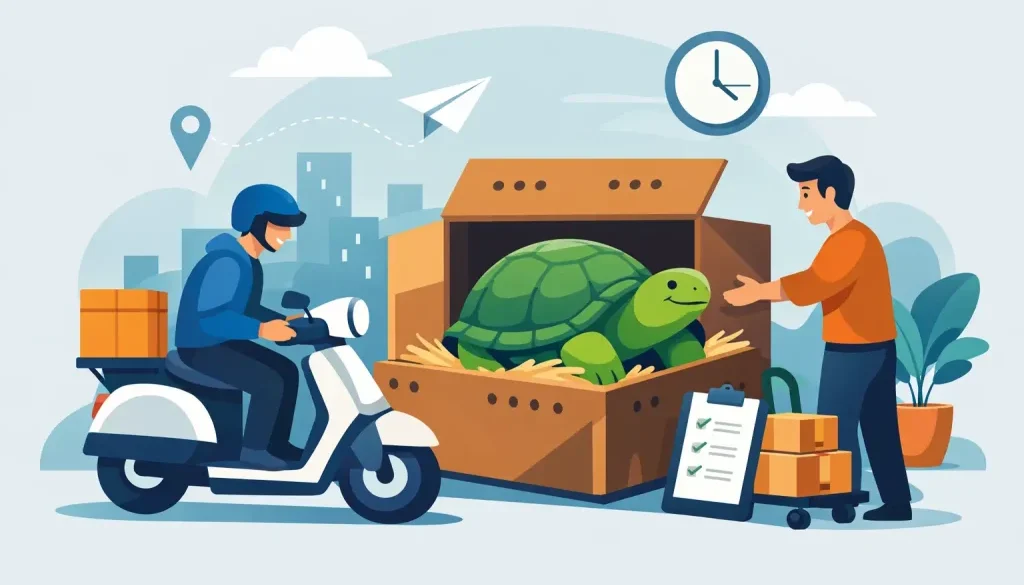
Tortoise Delivery by Courier Explained
If you are buying a tortoise online, the question usually comes quite early – how does tortoise delivery by courier actually work, and is it safe? It is a fair concern. A tortoise is not a parcel in the ordinary sense, and any reputable seller should treat delivery as part of the animal’s welfare, not just the end of a sale.
For buyers in England and Wales, courier delivery can be a sensible and well-managed option when it is handled properly. The key point is not whether a courier is involved, but what kind of courier, what preparation is in place, and whether the seller understands both welfare and legal responsibilities. That is where experience matters.
How tortoise delivery by courier should work
A proper animal courier service is very different from standard parcel delivery. Tortoises should only be transported using a registered service that is set up for live animals and understands the need for careful handling, timing, and suitable conditions in transit. If a seller is casual about this, that should raise concerns straight away.
A well-run delivery process starts before the tortoise leaves the premises. The animal should be healthy, feeding properly, and suitable to travel. Packaging must be secure, ventilated, and appropriate for the season. In cooler weather, extra care may be needed to maintain a safe temperature. In very hot or very cold conditions, a responsible seller may delay dispatch altogether. That can be frustrating if you are eager to receive your tortoise, but it is the right decision.
Timing also matters. Live animal deliveries are usually planned for specific days, with someone available to receive the tortoise promptly. Good communication is part of the service. You should know when delivery is expected and what to do on arrival.
Why specialist courier delivery is often the safest option
Many first-time buyers assume collection is always better. Sometimes it is, especially if you live nearby and want to speak face to face. But for many customers, specialist courier delivery is the more practical choice and can still be entirely suitable for the tortoise.
What matters is reducing unnecessary stress. A direct, organised journey with the correct packaging and an experienced courier is often preferable to a long day of informal transport, repeated stops, or unsuitable containers. A tortoise does not need fuss during travel. It needs calm conditions, safe packing, and as little disruption as possible.
This is also one reason established specialists use set delivery arrangements rather than making up the process as they go along. After many years in the trade, you learn that consistency protects both the animal and the customer.
What a reputable seller should check before dispatch
Before any tortoise is sent out, the seller should be satisfied that the purchase is suitable. That includes the species chosen, the buyer’s basic setup, and any legal paperwork that applies. Different tortoise species have different needs, and the right advice at the start makes a real difference.
For example, a first-time keeper buying a young Horsfield tortoise may need clear guidance on heating, lighting, substrate, feeding, and secure accommodation before delivery is arranged. A seller who is willing to talk that through is usually a seller who takes welfare seriously. If the conversation is rushed or the advice is vague, it is worth pausing.
Protected species also bring legal responsibilities. Where required, tortoises should come with the correct documentation, including specimen-specific Article 10 certification for applicable species. If microchipping is required by law due to size or species status, that should already be dealt with correctly. Delivery should never be used to gloss over legal details.
What happens on the day your tortoise arrives
Delivery day should be straightforward, but it helps to be prepared. Someone should be at the address to receive the tortoise. This is not an item to leave with a neighbour or on a doorstep. Once the tortoise arrives, bring it indoors promptly and open the travel container carefully in a quiet room.
Do not expect the tortoise to be lively immediately. After travelling, some tortoises are quiet and withdrawn for a while. That is normal. The important thing is to move the tortoise into its prepared enclosure, with correct heat, light, and access to water, and then allow it to settle.
It is best not to over-handle a newly arrived tortoise. Children, especially, are often excited to see a new pet, but a calm start is better. Let the tortoise warm through and adjust to its surroundings. Appetite may not be immediate, depending on the individual and the weather, but the setup should be ready from the moment it arrives.
Questions to ask about tortoise delivery by courier
If you are comparing sellers, ask direct questions. Who is carrying out the delivery? Is it a registered animal courier? Which areas are covered? What days are used for live animal transport? What happens if weather conditions are unsuitable?
You should also ask how the tortoise is packed, what paperwork is included, and whether support is available after arrival. These are not awkward questions. Any genuine tortoise specialist should be comfortable answering them clearly.
Price is relevant, but it should not be the only factor. Very cheap delivery can be a warning sign if it suggests corners are being cut. Live animal transport involves planning, compliance, and proper handling. Buyers who focus only on the lowest cost sometimes miss the more important point, which is whether the tortoise is being moved responsibly.
Delivery, welfare, and the law
In the UK, tortoise sales should not be treated casually. Buyers should expect captive-bred stock, clear species identification, and legal compliance where protected species are concerned. Delivery sits within that wider picture. It is not a separate convenience service. It is part of responsible retail.
A seller with long experience will usually have systems in place for inspections, licensing requirements, species-specific advice, and lawful paperwork. That gives customers confidence, but it also helps prevent problems later. If you ever need to prove legal ownership of a protected tortoise, proper documents matter far more than a verbal assurance.
Welfare matters just as much. Travel should be arranged to minimise stress and avoid unnecessary delays. That sometimes means waiting for a suitable delivery slot, or holding back dispatch because of poor temperatures. Good sellers do that without hesitation.
Is courier delivery right for every buyer?
Not always. If you are not going to be home, if your enclosure is not ready, or if you still have major questions about care, it may be better to delay. Buying a tortoise should not be rushed. Delivery works best when the practical side is already sorted.
It also depends on the species and the time of year. Some periods are simpler than others for safe transport. An experienced seller will advise honestly on that rather than pushing for a fast sale. That sort of straightforward advice is often what separates a specialist from a general pet website.
For many households, though, courier delivery is the most realistic way to buy from a trusted tortoise expert rather than settling for whatever is local. If the seller offers proper support before and after purchase, that can be a better outcome for both keeper and tortoise.
Choosing a seller you can speak to
One of the simplest checks is whether you can actually speak to someone knowledgeable before buying. Tortoise keeping is not especially difficult when done properly, but it does require correct setup and realistic expectations. A short conversation can clear up far more than a product page ever will.
That is especially helpful for first-time owners who are choosing between Hermann’s tortoises, Horsfield tortoises, Marginated tortoises, or another species with slightly different habits and space requirements. Delivery is only one part of the decision. The right tortoise, the right enclosure, and the right support matter just as much.
At Tortoises 4 You, that practical approach has always mattered. After forty four years of working with captive-bred tortoises, the focus remains on healthy animals, legal compliance, and clear advice customers can actually use.
When tortoise delivery by courier is done properly, it gives buyers across England and Wales access to specialist stock and experienced guidance without compromising on welfare. The best sign is not flashy wording or cheap promises. It is a seller who takes the time to do things correctly, even when that means asking a few extra questions before your tortoise begins its journey.