Captive Bred Tortoise Meaning for UK Keepers
A tortoise advertised as captive bred should give a prospective keeper real reassurance, but the captive bred tortoise meaning is more than a sales description. It tells you that the animal was bred in human care rather than taken from the wild. For a family choosing a long-lived pet, that difference matters for welfare, legality and the confidence to start keeping it properly.
At Tortoises 4 You, we have spent 44 years dealing with garden tortoises and helping owners make informed choices. A healthy tortoise deserves the right home, and a new keeper deserves straight answers about where their animal has come from and what paperwork should come with it.
What does captive bred mean for a tortoise?
Captive bred means a tortoise was produced from parent tortoises kept and bred under controlled care. It has not been collected from its natural habitat for the pet trade. The parents may be kept by a breeder in the UK or overseas, so captive bred does not automatically mean UK bred. A tortoise can be lawfully imported and still be genuinely captive bred.
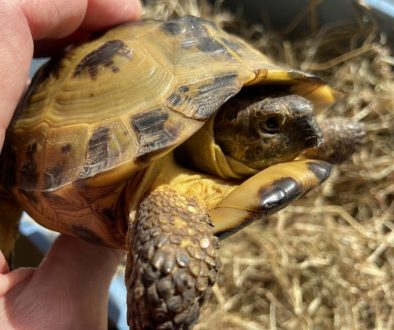
This is particularly relevant for popular species such as Hermann’s tortoises, Horsfield tortoises and Marginated tortoises. Wild populations have faced pressure from habitat loss and historic collection for trade. Choosing a properly sourced captive-bred animal supports a more responsible approach than removing tortoises from the wild.
The term also describes origin, not personality. A captive-bred tortoise is not necessarily tame, easy to handle or suitable for every household. Tortoises should not be treated like cuddly pets. They need secure accommodation, correct heat and lighting, a suitable diet, time to settle, and calm daily observation. Their welfare is always more important than how photogenic they are on the first day home.
Why captive breeding is better for welfare
Wild-caught tortoises can experience considerable stress during capture, holding and transport. They may arrive dehydrated, underweight, carrying parasites or struggling to adapt to an unfamiliar environment. Even when an animal appears active, its history may be uncertain.
A responsibly reared captive-bred tortoise has had the advantage of being accustomed to managed conditions from the start. A good breeder or specialist can monitor feeding, weight, growth and general health, then give the buyer useful information about the animal’s routine. That continuity is valuable, especially for first-time keepers.
There are no guarantees with any living animal. A captive-bred tortoise can still become unwell if its enclosure, temperatures, UVB provision or diet are wrong. However, knowing the animal’s background gives a keeper a far stronger starting point and helps avoid the ethical and practical concerns that can come with poorly documented animals.
Captive bred tortoise meaning and UK paperwork
The legal side can seem confusing, mainly because different tortoise species have different levels of protection. The key point is simple: a responsible seller should be able to explain the animal’s status and provide the relevant documents where they are required.
Some tortoises, including Hermann’s tortoises, are subject to strict CITES-related controls. Where an Article 10 certificate is required for commercial sale, it must relate to that individual tortoise. It is not a generic certificate for a group of animals and should accompany the tortoise when it is sold. The details on the certificate need to match the animal, including its identification information.
For larger protected tortoises, that identification may be a microchip. If your tortoise is microchipped, ask for the chip number to be checked against the accompanying paperwork. This is a sensible part of the handover process, not an awkward question. A reputable specialist will expect you to care about it.
Depending on the species and its circumstances, other proof of lawful origin may also be relevant. Keep every document supplied safely for the whole time you own the tortoise. If you later need veterinary treatment, move home, arrange care during a holiday, or eventually pass the tortoise on, a clear record is useful.
Be cautious if somebody says that papers are unnecessary because a tortoise is “only a pet”, offers a protected species without its documentation, or cannot clearly explain its origin. A low price is not a saving if you inherit legal uncertainty or an animal whose history cannot be verified.
What to ask before buying a tortoise
The best time to ask questions is before agreeing to buy. An experienced seller should welcome this, because the right species and setup reduce problems later.
Start by asking whether the tortoise is captive bred and where it has been reared. Ask its approximate age or hatch year, the species, its current diet, its normal indoor or outdoor routine, and whether it has been health checked or monitored for weight and feeding. If documentation is required, establish exactly what will be supplied and whether the tortoise is microchipped.
It is also worth asking what support is available once the tortoise is home. New owners often need help with practical details: selecting a suitably sized tortoise table or enclosure, setting temperatures correctly, choosing safe plants and weeds, or recognising when a tortoise is not eating as it should. Free, friendly advice from a specialist can be far more useful than relying on conflicting information from social media.
For buyers in England and Wales, delivery should be arranged with welfare in mind. Tortoises must not be treated like ordinary parcels. A registered animal courier, carefully planned journey and clear arrival arrangements help ensure the tortoise gets to its new home safely.
Captive bred does not remove the need for good care
A tortoise may have the best possible start in life, but its future health depends on the keeper. Before bringing one home, have the enclosure running and checked. Heat, UVB lighting, substrate, shelter, water and safe food should all be ready before the tortoise arrives, not purchased in a rush afterwards.
The exact setup depends on species, age and the time of the year. Horsfield tortoises, Hermann’s tortoises and Marginated tortoises have different adult sizes, temperaments and husbandry considerations. Western Dwarf Hermann’s tortoises are smaller and rarer, but small does not mean maintenance-free. Every species needs careful planning.
Diet is another area where general advice can be misleading. Most Mediterranean-type garden tortoises thrive on a high-fibre, weed-based diet rather than fruit, supermarket salad or protein-rich foods. Incorrect feeding and lighting can contribute to poor shell growth and long-term health problems. A specialist should help you understand the needs of the particular tortoise you are considering, rather than selling the same setup for every species.
Remember the commitment as well. Many tortoises can live for decades. Buying one is not a short-term purchase for a child that may lose interest after a few months. Adults should be ready to take responsibility for daily care, bills, space and contingency plans if family circumstances change.
Signs of a responsible tortoise seller
A responsible seller is open about both the pleasures and demands of tortoise keeping. They will not pressure you into choosing an unsuitable animal just because one is available. They should be able to discuss the tortoise’s origin, condition, diet and legal status in plain English, and they should provide the required paperwork at the point of sale.
Look for a business that puts welfare before speed. Properly housed animals, clear species information, appropriate identification and a willingness to speak directly with customers are all positive signs. Telephone advice is especially helpful when you are deciding between species or preparing a first enclosure, as a short conversation can prevent costly mistakes.
A captive-bred tortoise is a positive starting point, but it should lead to a broader conversation about care, paperwork and lifelong responsibility. Ask the questions, prepare properly, and choose a tortoise only when you are confident you can give it the settled, well-managed home it deserves.