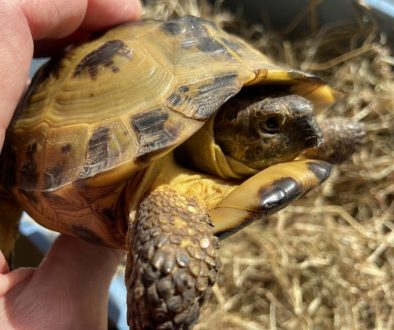
Hermann Horsfield Temperament Comparison
A Hermann Horsfield temperament comparison is useful because these two popular garden tortoises can look like similar choices on paper, yet they often feel quite different to live with. Both are hardy, characterful species when properly kept, but the best fit depends on what you expect from a pet, the enclosure you can provide and how involved the family will be in daily care.
Temperament is never guaranteed by species alone. A captive-bred tortoise that has been well started, given correct space and handled sensibly is more likely to be settled than one whose early care has been poor. Age, season, health and individual personality all make a difference. Still, there are reliable general patterns that can help first-time keepers choose confidently.
Hermann Horsfield temperament comparison: the general picture
Hermann’s tortoises and Horsfield tortoises are both active, alert animals rather than pets that sit quietly in one place. They should be watched, not passed around. Neither species is suited to frequent handling, especially by young children, but both can learn that a person approaching usually means food, fresh water or a safe routine.
A well-settled Hermann’s tortoise is often described as outgoing. Many soon come to investigate their keeper, move purposefully around their enclosure and show plenty of interest at feeding time. They can be very engaging to watch and are often a good choice for families who want a visible, active tortoise during the warmer months.
Horsfield tortoises are equally full of character, but their behaviour is often more independent. They are determined diggers, quick to test boundaries and highly capable of turning a seemingly secure garden pen into an escape route. A Horsfield may be bold and food-focused, yet still prefer to retreat underground or into a hide when it wants privacy.
The difference is not that one species is friendly and the other is unfriendly. Both can become familiar with their keeper. The practical distinction is that Hermann’s tortoises tend to be seen more often above ground, while Horsfields have a stronger natural urge to burrow and can be more single-minded about exploring and digging.
What handling tells you – and what it does not
Tortoises do not enjoy cuddling in the way a dog or rabbit might. Picking one up removes its control over the situation and can cause stress, even when it remains still. A quiet tortoise is not necessarily a relaxed tortoise. It may simply be withdrawing into its shell.
For either species, handling should be limited to necessary occasions: health checks, weighing, moving between a safe indoor and outdoor area, or inspecting the animal if there is a concern. Support the whole body, keep the tortoise level and return it promptly to its enclosure. Children should be supervised and taught to appreciate the tortoise without constantly touching it.
If a family wants an animal that children can hold and interact with regularly, a tortoise is unlikely to be the right pet. If they want a long-lived animal with a recognisable routine and plenty of individual character, either a Hermann’s or Horsfield can be very rewarding.
Hermann’s tortoise temperament in a family setting
Hermann’s tortoises are often a sensible choice for first-time keepers who can provide a properly designed garden enclosure. Their active, visible nature makes them enjoyable for families to observe. Many develop a regular pattern of basking, grazing, exploring and returning to familiar hiding places.
They are usually responsive to routine. A tortoise that knows when food arrives may walk towards its keeper, and that behaviour can feel wonderfully interactive. It is still best understood as confidence and learned association rather than affection in the human sense.
A Hermann’s tortoise needs room to walk, varied ground to explore, shelter from poor weather and secure boundaries. They can climb more effectively than many new owners expect, so enclosure sides and corners need careful thought. They also need protection from dogs, foxes, rats and other hazards. An open lawn is not a tortoise enclosure.
For UK buyers, legal paperwork is a significant part of choosing a Hermann’s tortoise. Hermann’s tortoises are protected species and commercial sale requires the correct specimen-specific Article 10 certificate. A responsible seller should make the documentation clear before purchase, not treat it as an afterthought.
Horsfield temperament and the urge to dig
A Horsfield tortoise can be an excellent pet for somebody who enjoys a more determined, busy animal and is prepared to build around its natural behaviour. Digging is not bad behaviour. It is what a Horsfield tortoise does. In the wild, burrows offer safety from heat, cold and predators. In a garden enclosure, that instinct remains strong.
This can make Horsfields great fun to watch, but it changes the housing requirements. A lightweight run placed straight on turf is rarely enough. The enclosure needs secure sides, a dig-proof base or buried perimeter protection, dry areas and hides that do not collapse. Every gap deserves attention, particularly after rain or when the ground has softened.
Horsfields can be very bold around food, and many keepers find them full of personality. At the same time, they may spend more time tucked away than a Hermann’s tortoise, especially if temperatures are unsettled. This is not automatically a problem. The question is whether the tortoise is alert, eating well when conditions are suitable, and behaving normally for the season.
Their preference for dry, well-drained ground is particularly relevant in Britain. A damp, muddy enclosure is not suitable simply because it is outdoors. Good drainage, a dry shelter and sensible seasonal management are essential for welfare.
Activity, space and enclosure design matter more than people expect
Many apparent temperament problems are really husbandry problems. A tortoise that hides all day may be cold, insecure or lacking a suitable shelter. A tortoise that endlessly climbs at the enclosure wall may not have enough room, enough cover or enough stimulation from natural terrain. A tortoise that seems grumpy when approached may be repeatedly handled or disturbed while resting.
Both species benefit from a secure outdoor enclosure in suitable weather, with safe grazing opportunities, shade, clean water and protection from predators. Inside accommodation, when required by the weather or the animal’s needs, must offer correct heat, lighting, ventilation and space. Keeping a tortoise permanently in a small vivarium or on a bare floor does not meet its needs.
Horsfields generally demand more planning below ground; Hermann’s tortoises often demand more thought around climbing and secure edging. Neither is a low-effort pet. They can live for many decades, and their daily care must continue through holidays, changing family circumstances and all the ordinary demands of life.
Which temperament is likely to suit you?
Choose a Hermann’s tortoise if you are drawn to an active, frequently visible tortoise and can meet the additional legal requirements that come with a protected species. They often suit owners who enjoy watching a tortoise patrol its enclosure and establish a reliable daily routine.
Choose a Horsfield if you appreciate a compact, energetic tortoise with a strong independent streak and you are willing to provide a truly escape-proof, dry enclosure. Their digging behaviour is fascinating, but it is not optional. It needs to be designed for from day one.
For either species, captive-bred stock is the right starting point. Ask about the tortoise’s age, current diet, housing, health history and documents before committing. The cheapest tortoise is rarely the best value if advice, lawful paperwork and after-sales support are missing.
At Tortoises 4 You, forty-four years of specialist experience has shown that the happiest outcomes start with an honest conversation before the sale. Discuss the garden, the household, the expected routine and any concerns about hibernation or ongoing care. The right tortoise is not simply the one that looks nicest on the day – it is the one whose natural behaviour you are ready to accommodate for many years to come.