Hermann’s Tortoise Diet Guide for Healthy Feeding
A Hermann’s tortoise should not be eating like a small dinosaur from the salad drawer. Their natural diet is built around tough, fibrous wild plants, not sweet fruit, watery lettuce or large portions of shop-bought vegetables. This Hermann’s tortoise diet guide explains what to feed, what to leave out and how to keep feeding sensible throughout the year.
For most UK keepers, the aim is straightforward: offer a wide variety of safe weeds and leafy plants, keep the diet high in fibre and low in sugar, and make sure the tortoise has the right heat and UVB lighting to use the nutrients it eats. Good feeding is not about finding one perfect food. It is about variety, consistency and avoiding the common mistakes that can affect health over time.
What Hermann’s tortoises are designed to eat
Hermann’s tortoises are Mediterranean grazers. In the wild, they browse on a changing mixture of weeds, flowers and leaves. These plants are generally fibrous, relatively low in protein and low in sugar. That is the pattern we should try to copy in captivity.
A diet that is too soft, rich or repetitive can contribute to poor shell growth, weight gain, digestive problems and an over-reliance on food that does not suit the species. A tortoise may eagerly eat tomato, cucumber or fruit, but enthusiasm does not make a food appropriate. Many foods humans see as healthy are simply too sugary or watery to form part of a Hermann’s regular diet.
Young tortoises need the same type of food as adults. They do not need high-protein feeds to grow. Steady, natural growth is far safer than trying to produce a rapidly growing tortoise.
The best everyday foods
The main part of the diet should be safe, pesticide-free weeds and broad leaves. Variety matters because each plant has a different balance of fibre and minerals. Where possible, gather from an area that has not been sprayed, fertilised or used by dogs, and never collect from a roadside verge where plants may be contaminated.
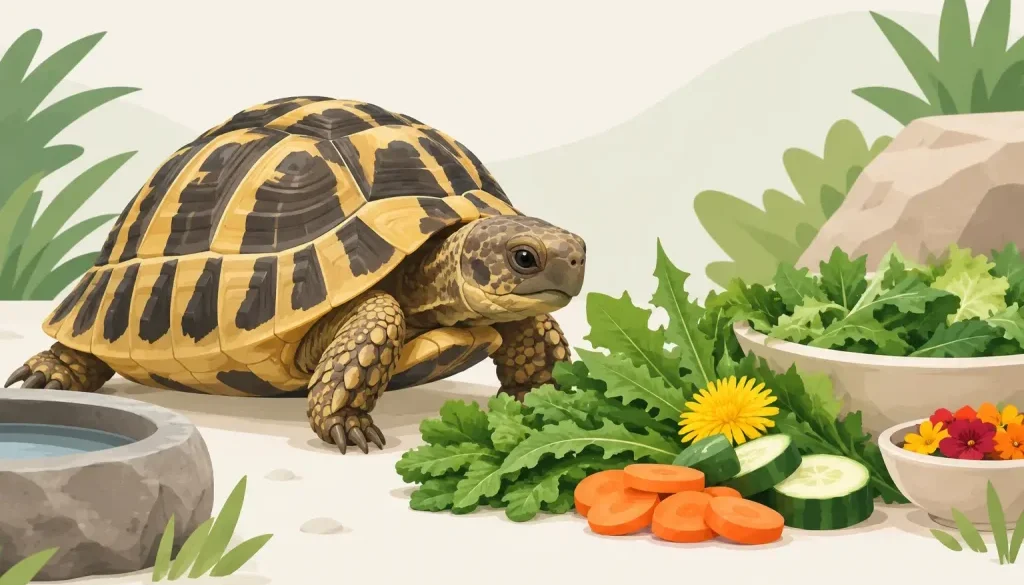
Good choices include dandelion leaves and flowers, sow thistle, plantain, hawksbeard, smooth hawksbeard, cat’s ear, clover in moderation, mallow, dead nettle, nipplewort, bristly oxtongue and herb Robert. Chickweed can be fed as part of a varied selection, though it is softer than many of the better staple weeds.
Garden plants can also be useful. Hibiscus leaves and flowers, rose leaves and flowers, hollyhock, viola and pansy flowers are popular with many tortoises. Always be certain of identification before offering any plant. If there is any doubt, do not feed it. A plant-identification book or a reliable specialist plant list is a worthwhile part of tortoise keeping.
During the colder months, or when weed growth is limited, suitable shop-bought leaves can help keep the diet varied. Endive, escarole, radicchio, rocket, lamb’s lettuce and watercress are all useful options. They are best mixed together rather than fed as a single daily food. Romaine lettuce is acceptable occasionally but is not a particularly nourishing staple on its own.
A practical meal might be a mixed pile of dandelion, plantain and sow thistle in summer. In winter, it may be a base of endive and radicchio with any safe home-grown leaves available. The more closely the overall diet resembles a mixed wild browse, the better.
How much should you offer?
Offer food daily when your Hermann’s tortoise is awake, warm and active. A portion around the size of the tortoise’s shell is a useful starting point, although appetite changes with age, temperature, season and activity. Remove old food before it becomes stale or is walked through.
Do not be concerned if an adult eats less on some days. Tortoises are not machines, and a healthy animal’s appetite will vary. A sudden or prolonged refusal to eat in a properly heated enclosure, however, deserves attention, particularly if there are signs of lethargy, nasal discharge, weight loss or changes in droppings.
Foods to avoid or keep well away from
Fruit should not be a routine food for a Hermann’s tortoise. Strawberry, banana, apple, melon and similar foods are sugary and can upset the balance of the gut. The same applies to tomato. These are often offered as treats, but there is no need for them in a properly planned diet.
Avoid animal protein completely. Meat, cat food, dog food, cheese, eggs and insects are not suitable. Hermann’s tortoises are herbivores, and protein-heavy foods can place unnecessary strain on the body and encourage unhealthy growth.
Iceberg lettuce, cucumber and celery are largely water and provide very little useful nutrition. Spinach, chard and beet leaves are not good regular choices because they contain compounds that can interfere with calcium use. Cabbage, kale and spring greens may be fed occasionally, but they should not become the main diet.
Also keep clear of bread, pasta, cereal, biscuits and any processed human food. These foods have no place in a tortoise enclosure, however interested your pet may seem.
Calcium, water and the role of UVB
Calcium is essential for healthy bones, beak and shell. A plain calcium carbonate supplement can be lightly dusted over food, especially for growing tortoises, egg-laying females and animals that are not eating a consistently varied diet. A light dusting is enough. More is not automatically better, and supplements do not correct unsuitable feeding or poor lighting.
Keep a cuttlefish bone in the enclosure as an additional calcium source. Some tortoises ignore it for weeks, then use it when they need to. It can also help with natural beak wear.
Fresh water must always be available in a shallow, sturdy dish that the tortoise can enter and leave easily. Even if you rarely see your tortoise drink, it should have access to water every day. Regular shallow soaks are particularly helpful for hatchlings and young tortoises, and can support hydration during warm weather.
A correct UVB source and suitable basking temperature are just as important as the food itself. Without UVB, or access to safe natural sunlight in an appropriate outdoor enclosure, a tortoise cannot process calcium properly. A calcium-rich diet cannot compensate for an old UVB lamp, incorrect positioning or an enclosure that is too cool for digestion.
Feeding outdoors and through the seasons
An outdoor enclosure in suitable weather gives a Hermann’s tortoise the chance to browse, exercise and benefit from natural sunlight. It must be secure, sheltered and planted only with safe species. Never assume a garden is safe just because it looks natural. Slug pellets, lawn treatments, poisonous plants and chemical sprays can all create serious risks.
Hermann’s tortoises often eat more actively in warm, bright conditions and less when temperatures fall. This is normal, but do not confuse seasonal slowing with preparation for hibernation without proper planning. Not every tortoise is fit to hibernate, and young, underweight or unwell animals need individual advice. Feeding should not be abruptly stopped simply because the weather has turned cooler.
If a tortoise is being prepared for hibernation under knowledgeable guidance, the feeding and fasting period must be managed carefully alongside temperature, hydration and weight monitoring. For a first-time keeper, it is wise to seek species-specific advice before making that decision.
A simple routine that works
Wash gathered leaves if they are dusty, then offer a mixed selection rather than a neat bowl of one item. Keep food off damp substrate where possible by using a slate, tile or shallow feeding area. This makes it easier to see what has been eaten and helps keep the meal clean.
Weigh your tortoise regularly, ideally on the same set of digital scales and at the same time of day. A written record gives you far more useful information than judging health by eye alone. A steady body weight, a firm shell, bright eyes and active behaviour when warm are reassuring signs, but any ongoing concern should be discussed with a reptile-experienced vet.
At Tortoises 4 You, we have seen over many years that the best results come from getting the basics right from the first day: a suitable enclosure, correct lighting, daily access to water and a varied weed-based diet. There is no need to overcomplicate feeding. Learn a dependable range of safe plants, keep the sugary extras out of the routine, and let your Hermann’s tortoise do what it is built to do – graze slowly on good, natural food.