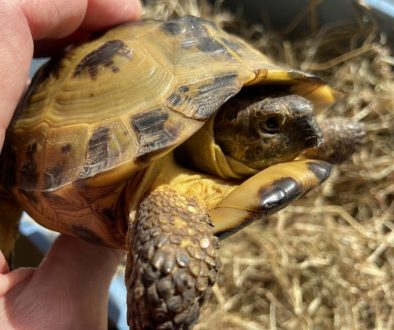
Western Dwarf Hermann’s Care for UK Homes
A Western Dwarf Hermann’s tortoise may be small, but its needs are not. Good Western Dwarf Hermann’s care means providing proper heat, UVB lighting, a weed-based diet and secure space to roam – not simply keeping a tortoise in a small indoor pen. Get the set-up right before your tortoise arrives and you give it the best possible start.
Western Dwarf Hermann’s tortoises, Testudo hermanni hermanni, are attractive, characterful garden tortoises. They are generally smaller than Eastern Hermann’s and are often chosen by keepers who want a manageable species without compromising on natural behaviour. They can live for many decades, however, so they should be treated as a long-term commitment rather than a short-lived family pet.
Western Dwarf Hermann’s Care Starts With Space
A young tortoise needs room to explore, regulate its temperature and find food. A purpose-built open tortoise table is usually a better indoor option than a vivarium with solid glass sides. Glass can cause repeated pacing, as a tortoise may try to walk through the reflection or towards visible space beyond it.
For one youngster, aim for a table with a minimum floor area of around 120 cm by 60 cm, with larger always preferable. As the tortoise grows, the enclosure must grow too. An adult needs a generous, secure outdoor area during suitable weather, plus safe indoor accommodation for cooler periods.
Use a natural, diggable substrate. A pesticide-free topsoil and coir mix works well when kept dry on the surface but not dusty throughout. Avoid sand, wood shavings, cat litter and loose bark. These can create hygiene problems, cause irritation or be swallowed accidentally.
Include a dark, low hide at the cooler end, a shallow water dish that the tortoise can walk in and out of easily, and pieces of slate or flat stone for feeding. Slate helps keep nails and beak naturally worn as the tortoise walks and eats.
A garden enclosure needs real security
A Western Dwarf Hermann’s will benefit enormously from access to a secure outdoor enclosure in warm, settled UK weather. Natural sunshine, fresh air and grazing opportunities are difficult to replicate indoors. That said, a garden is only suitable when it is properly enclosed and supervised where necessary.
Tortoises climb, dig and squeeze through surprisingly small gaps. The sides of an enclosure should be solid enough to prevent them seeing tempting territory beyond, and should extend below ground level if digging is likely. Protection from foxes, dogs, rats and birds is essential, particularly for small tortoises. Never leave a young tortoise loose in an open garden.
British weather is changeable. A tortoise must always be able to return to a dry, sheltered area, and should not be left outside in cold, wet conditions simply because it is summertime.
Heat and UVB: The Essentials for Healthy Growth
Indoors, your tortoise needs both a basking lamp and quality UVB lighting. Heat lets it digest food, stay active and support normal body function. UVB allows vitamin D3 production, which is needed to use calcium correctly and maintain a strong shell and bones.
Set up the basking area at one end of the table, with a surface temperature of approximately 32-35°C. The cooler end should be noticeably cooler, generally in the low to mid-20s°C. This temperature gradient matters because a tortoise must be able to choose where it feels comfortable rather than being kept at one temperature throughout.
A suitable UVB tube or other reptile-specific UVB system should cover the usable enclosure area and be fitted at the manufacturer’s recommended distance. It must not be blocked by glass or plastic, as these materials filter UVB. Lamps also decline in output over time, even when they still appear bright, so replace them in line with the manufacturer’s guidance.
At night, lights should be off to allow a natural day-and-night rhythm. Extra night heat is not normally required in a warm home, but very cold conditions should be avoided. A reliable thermostat and digital thermometers are sensible safeguards, not optional extras.
Feeding a Western Dwarf Hermann’s Tortoise
The correct diet is simple in principle: high fibre, low sugar and based mainly on leafy weeds and safe flowers. In practice, it takes a little planning, especially through winter when fresh garden weeds are limited.
Offer a varied selection rather than relying on one leaf every day. Suitable choices can include dandelion leaves and flowers, plantain, sow thistle, mallow, clover in moderation, chickweed, broadleaf weeds and suitable tortoise-safe leafy greens. Variety helps provide a wider nutritional profile and keeps feeding interesting.
Fruit should not be a routine food for Hermann’s tortoises. Their digestive system is designed for fibrous plants, not sugary treats. Avoid animal protein, bread, dairy products, pellets as a complete everyday diet, iceberg lettuce and heavily processed human food.
A light dusting of a good-quality calcium supplement can be used regularly, particularly for growing animals and laying females. The exact amount depends on the diet, UVB provision and life stage, so avoid coating every meal heavily without reason. Fresh water should be available every day, even if you rarely see your tortoise drink.
Young tortoises also benefit from regular shallow soaks in lukewarm water. This supports hydration and gives you a useful opportunity to check that the tortoise is alert, active and passing droppings normally. Never leave it unattended in water.
Humidity and Shell Development
One common mistake is assuming that every Mediterranean tortoise should be kept completely dry. Western Dwarf Hermann’s tortoises need a dry, warm basking area, but youngsters should also have access to a humid hide or a slightly damper area beneath cover. This is especially helpful for hydration and smooth shell development.
The goal is not a wet enclosure. Constantly soggy substrate can lead to skin and shell problems. Instead, provide a choice: a dry warm zone, a comfortable cooler zone and a sheltered microclimate with some moisture. This allows the tortoise to manage its own needs in a more natural way.
Watch the shell as your tortoise grows. A smooth, evenly developed shell is the aim. Pronounced pyramiding, where the scutes rise sharply, can be linked to several husbandry issues, including poor diet, inadequate hydration, unsuitable temperatures or insufficient humidity. Early changes are a reason to review the set-up and seek experienced advice.
Hibernation Is a Decision, Not a Shortcut
Hermann’s tortoises are a species that may hibernate, but hibernation should never be attempted automatically. It is only suitable for a healthy, well-grown tortoise of appropriate weight, with a keeper who understands the process and has prepared properly.
A new owner does not have to hibernate a recently acquired youngster in its first winter. Keeping it awake with correct lighting, warmth and feeding can be the safer route while you learn its normal behaviour and establish its health. Some keepers also choose not to hibernate particular animals because of health history, size or veterinary advice.
Before any planned hibernation, obtain a proper health assessment from a reptile-experienced veterinary surgeon and follow a controlled process. A tortoise that is underweight, unwell, dehydrated, has nasal discharge, has not been eating normally or has not been prepared correctly must not be hibernated.
Legal Paperwork and Buying With Confidence
Western Dwarf Hermann’s tortoises are protected under CITES rules. When buying in the UK, make sure you understand the legal documentation that applies to the individual animal. For specimens requiring it, this includes a valid, specimen-specific Article 10 certificate permitting commercial use. Keep all original paperwork safely for the tortoise’s lifetime and ensure any future transfer is handled lawfully.
Choose a captive-bred tortoise from a specialist who can explain its background, paperwork and day-to-day care clearly. You should be able to ask direct questions about its age, feeding routine, UVB set-up and whether hibernation has been considered. At Tortoises 4 You, free friendly husbandry advice is available because the right home matters just as much as the sale.
A well-kept Western Dwarf Hermann’s becomes a familiar presence in the household: purposeful at breakfast, determined in the garden and surprisingly good at letting you know when its routine has changed. Take time to prepare the enclosure properly, and you will have every chance to enjoy a healthy tortoise for many years to come.