How to Bathe Tortoises Safely at Home in the UK
A tortoise may look perfectly content while sitting in a shallow bath, but bathing is not simply a pleasant extra. For young tortoises especially, it is a practical part of good husbandry. Knowing how to bathe tortoises correctly helps support hydration, encourages urination and passing waste, and gives you a regular opportunity to check that your animal is bright, active and in good condition.
A bath should be calm, warm and supervised from start to finish. It should never be deep enough for a tortoise to struggle, and it is not a substitute for the right enclosure temperatures, lighting, diet and access to fresh drinking water.
Why tortoises need regular baths
Tortoises absorb and drink water during bathing. This is particularly useful for babies and growing juveniles, which can dehydrate more quickly than an established adult. A gentle soak also often prompts them to wee or pass urates – the white, toothpaste-like material excreted alongside urine.
The occasional soft poo during a bath is normal. It is one reason a separate bathing bowl is better than using the water dish in the enclosure. Dispose of the water afterwards and clean the bowl thoroughly before its next use.
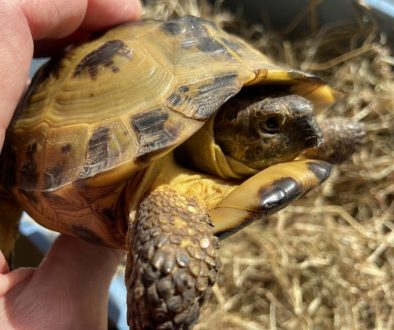
Bathing also gives you a close look at your tortoise without unnecessary handling. You can check the eyes are open and clear, the nostrils are clean, the shell has no damage, and the legs and skin show no swelling, wounds or unusual marks. A healthy tortoise should be alert and able to hold its head above water with ease.
What you need before bathing a tortoise
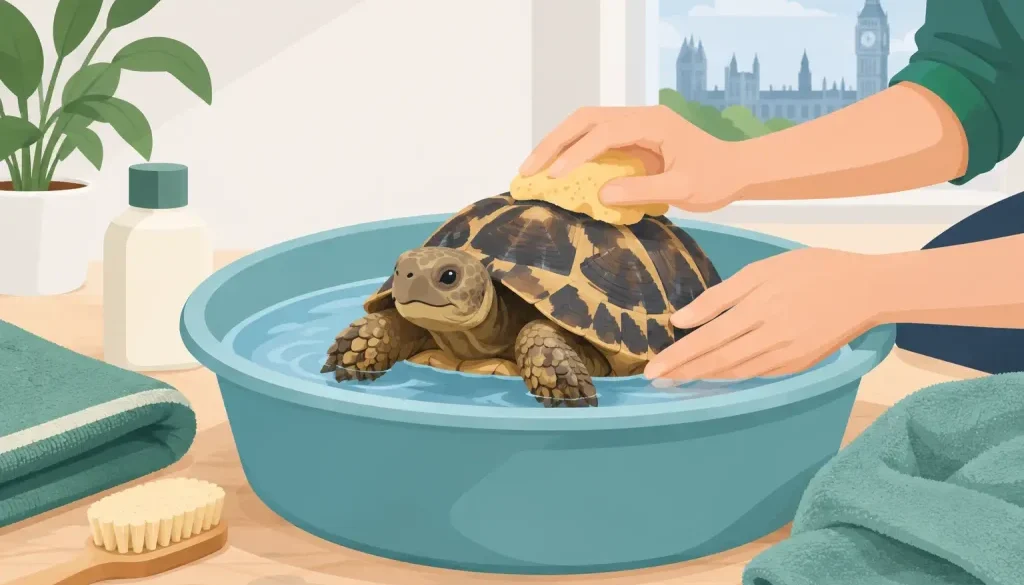
You do not need expensive equipment. Choose a clean plastic washing-up bowl or shallow storage tray that is used only for your tortoise. It needs to be large enough for the tortoise to stand and turn around, but not so large that it becomes difficult to supervise.
Use plain, clean lukewarm water. There is no need for soaps, shampoos, disinfectants, oils, additives or reptile bathing products. These can irritate the skin and eyes, leave residues, or be swallowed. A tortoise does not need its shell scrubbed to keep it healthy.
Have a clean towel ready for drying. For small tortoises, it is helpful to use a shallow bowl with a flat base rather than a slippery or steep-sided container.
How to bathe tortoises step by step
Prepare the bath in a warm, draught-free room. Cold surroundings can quickly undo the benefit of a warm soak, particularly for a young tortoise.
Check the water temperature and depth
The water should feel lukewarm, not hot. As a guide, aim for around 30-32°C. If it feels uncomfortably warm on the inside of your wrist, it is too warm for your tortoise. A digital thermometer is the most reliable way to check it.
For a baby or small juvenile, the water should reach around the lower edge of the shell, or just below the chin when it is standing naturally. For a larger tortoise, keep the level shallow enough that it can easily stand with its head well clear of the water. Deep water is dangerous. Tortoises can drown, even in surprisingly shallow water, if they tip over or become distressed.
Place your tortoise into the bowl gently
Lower your tortoise into the water steadily, keeping it level and supporting the shell. Do not drop it in, and do not hold it under the water. Most tortoises settle after a moment and may drink, stretch their neck or walk slowly around the bowl.
Stay with the tortoise throughout. Never leave it unattended to answer the phone, prepare food or deal with another pet. If it repeatedly tries to climb out, appears panicked or cannot keep its face clear of the water, end the bath and reassess the depth and temperature.
Let the soak last 10 to 20 minutes
For most young tortoises, 15 to 20 minutes is a sensible bathing time. Adults may be happy with around 10 to 15 minutes, depending on their size, species and circumstances. The water will cool as time passes, so do not extend the bath just because the tortoise seems settled.
If the water becomes soiled, carefully lift your tortoise out, empty and rinse the bowl, then refill it with fresh water at the correct temperature. Avoid topping up the existing water with hot water while the tortoise is still in it, as this can create hot spots.
Dry your tortoise before returning it to its enclosure
Lift the tortoise out securely and place it on a clean towel. Pat the shell, legs and underside dry rather than rubbing hard. Pay attention to the folds around the legs and tail, where moisture can linger.
Return your tortoise directly to its warm enclosure and its normal basking area. A young tortoise should not be put back into a cold or poorly heated enclosure after bathing. The correct basking temperature and UVB lighting remain central to digestion, growth and general health.
How often should you bathe a tortoise?
Frequency depends on age, species, housing and the individual animal. Babies and young growing tortoises are commonly bathed daily or every other day. This is especially helpful during their early months, when regular hydration and close observation matter most.
Many healthy adult Mediterranean tortoises, including Horsfield, Hermann’s and Marginated tortoises, do well with a bath once or twice a week. In hot weather, during very dry indoor conditions, or if an adult is not drinking reliably, a little more frequent bathing may be appropriate.
That said, bathing cannot correct an unsuitable set-up. A tortoise that is constantly dehydrated needs its care reviewed. Check temperatures, humidity where appropriate, diet, UVB provision and the availability of a shallow water dish. Species needs vary, so advice for a Mediterranean tortoise should not automatically be applied to every type of tortoise.
Common bathing mistakes to avoid
The biggest mistake is using water that is too deep. Even a strong adult can become stressed if it cannot stand securely. Always err on the shallow side and supervise closely.
Cold water is another common problem. A tortoise will not gain much from a chilly bath and may become cold before it returns to its basking area. Equally, hot water can burn sensitive skin. Check the temperature every time rather than guessing.
Do not use a kitchen sink, bath or household basin unless it has been thoroughly cleaned and is reserved for this purpose. Household cleaning residues can be harmful. A dedicated plastic bowl is simple, hygienic and easy to manage.
Avoid brushing the shell with a toothbrush or applying oils to make it look shiny. A naturally grown shell will not always look polished, and excessive cleaning can damage the protective outer layer. Good diet, appropriate UVB and correct conditions are what support healthy shell growth.
When bathing is not enough
A bath is supportive care, not a medical treatment. Contact a reptile-experienced vet if your tortoise has persistently closed or swollen eyes, bubbling or discharge from the nose, wheezing, obvious weakness, refusal to eat, diarrhoea, blood in droppings, a swollen limb, or difficulty passing waste.
Thick white urates can sometimes point to dehydration, but they should be considered alongside the tortoise’s diet, behaviour and housing. Do not rely on extra baths alone if something is clearly wrong. Prompt veterinary advice is safer than waiting for a small problem to worsen.
At Tortoises 4 You, our advice is always to make bathing part of a sensible daily routine, not a stressful event. A clean bowl, shallow lukewarm water, close supervision and a warm enclosure afterwards will give your tortoise the simple, safe support it needs.