Tortoise Breeder Versus Pet Shop: Which Is Best?
A tortoise may be with your family for several decades, so the decision is not simply about where one is available first. When considering a tortoise breeder versus pet shop, the real questions are whether the animal has been properly raised, whether its history and paperwork are clear, and whether you can get reliable help once it is home.
A good pet shop can offer healthy, legally kept tortoises. Equally, not every seller describing themselves as a breeder offers the same standard of care. The sensible choice is to look beyond the label and ask practical questions about captive breeding, housing, diet, documentation and ongoing support.
Tortoise breeder versus pet shop: the main difference
A specialist breeder or tortoise retailer generally works with a smaller range of species and has more detailed knowledge of their needs. They should be able to explain how each tortoise has been kept from hatching, what it is eating, its likely adult size, and the correct set-up for its new home. This matters because a Horsfield tortoise does not have exactly the same requirements as a Hermann’s or Marginated tortoise.
A general pet shop may sell many types of animal alongside reptile equipment, food and supplies. This can be convenient, particularly if you need to buy a complete set-up locally, but the depth of tortoise knowledge can vary considerably between shops and members of staff. Some shops have an excellent reptile section and experienced keepers. Others may have limited experience with the particular species in front of them.
The difference is often in the conversation you can have before buying. A specialist should be comfortable discussing temperatures, UVB lighting, outdoor accommodation, hibernation, diet and legal requirements in detail. They should also be prepared to tell you if a tortoise is not suitable for your circumstances.
Health starts with how a tortoise is raised
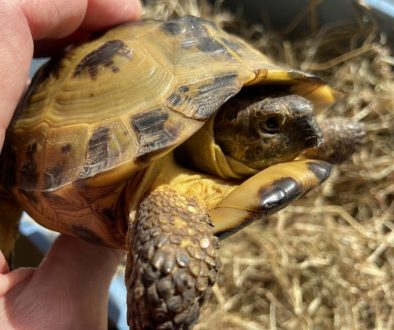
Captive-bred tortoises from a reputable source have a known start in life. You should be able to ask about hatch date or approximate age, current weight, feeding routine and whether the tortoise has been growing steadily. A healthy young tortoise should be alert, have bright, clear eyes and a firm shell, and move with purpose when warmed up.
Do not be persuaded by a very low price alone. A tortoise that has been poorly housed or fed incorrectly may develop problems that are expensive and upsetting to put right. Pyramiding of the shell, poor growth, runny eyes, wheezing, lack of appetite and a soft shell all warrant careful questions and, where necessary, veterinary advice.
The conditions in which the tortoises are displayed also tell you a great deal. They need suitable heat, a proper UVB source, clean water, appropriate substrate and space to move away from heat when necessary. A tortoise sitting in a small glass tank under unsuitable lighting is not being shown in conditions that inspire confidence, however friendly the sales pitch may be.
A specialist supplier is more likely to have a consistent routine for the species they offer. That does not remove the need for you to inspect the animal and ask questions, but it gives you a clearer picture of the care behind the sale.
Ask about the individual tortoise, not just the species
It is easy to receive general advice such as “Hermann’s tortoises are friendly” or “Horsfields are ideal for beginners”. Useful as this may be, your concern should be the individual animal. Ask what it currently eats, whether it has been kept indoors or outdoors, when it was last weighed and whether there have been any health concerns.
This is particularly helpful for first-time keepers. Taking home a tortoise already used to the correct diet and daily routine makes it far easier to settle it into a suitable enclosure without sudden, unnecessary changes.
Paperwork is part of responsible ownership
Certain tortoise species are protected by CITES controls, and the paperwork required will depend on the species and the individual animal. Where required, a seller should provide the relevant specimen-specific Article 10 certificate and ensure microchipping requirements have been met. The documents should relate to the tortoise being sold, not simply be generic paperwork for the species.
This is an area where buying from a knowledgeable specialist can make a real difference. The seller should explain what paperwork you are receiving, how to keep it safe and what your responsibilities are if you later sell, give away or breed from the tortoise. If an answer is vague, or documents are promised later without a clear reason, it is sensible to pause.
A reputable pet shop should also understand these obligations. The point is not that one route is automatically lawful and the other is not. It is that the seller must be able to demonstrate legal, traceable sourcing and provide the correct documentation before you commit.
Captive-bred status is also worth discussing. Wild-caught tortoises can carry greater welfare concerns, may struggle to adapt to captivity and can have an uncertain background. For family pets, responsibly sourced captive-bred tortoises are the right starting point.
Advice after the sale can prevent common mistakes
Many early tortoise problems are caused by a poor set-up rather than an unhealthy tortoise. New keepers can be given conflicting information about indoor tables, vivariums, heat lamps, UVB tubes, bedding, supermarket salad and hibernation. A seller who can offer clear, species-specific guidance is extremely valuable.
Before purchase, you should know the minimum space needed now and as the tortoise grows, how to create a safe temperature gradient, what weeds and leafy foods form a suitable diet, and whether an outdoor enclosure is practical. You should also understand that tortoises are not low-maintenance pets. They need daily checks, correct lighting and heating, regular cleaning and a commitment that can last well beyond childhood.
A good specialist will not disappear once payment has been made. Free, friendly husbandry advice gives you somewhere to turn when you are unsure about appetite, behaviour or changes to the enclosure. Tortoises 4 You, for example, combines captive-bred tortoises with practical support on care, delivery and the documentation needed for protected species.
When a good pet shop may be the right choice
A well-run local pet shop with knowledgeable reptile staff can be a perfectly reasonable place to buy a tortoise. Seeing the animal in person is useful, and a local shop may be convenient for collecting equipment or asking a quick follow-up question. If the shop can show that the tortoise is captive-bred, healthy and correctly documented, there is no reason to dismiss it simply because it is a pet shop.
The key is to test the advice. Ask staff which UVB lighting they recommend and why, what the tortoise currently eats, how it has been housed, and what paperwork comes with it. Their answers should be specific, consistent and unhurried. They should not encourage an impulse purchase without first discussing your available space, household routine and long-term commitment.
It may be better to walk away if the tortoise is sold with a very basic starter kit that will quickly prove unsuitable, or if you are told that it can live on fruit, lettuce or pellet food alone. Convenience is useful, but it should never replace welfare-led guidance.
Questions worth asking any seller
Whether you choose a breeder, specialist retailer or pet shop, ask the same straightforward questions before paying:
- Is this tortoise captive-bred, and can you explain its background?
- What species is it, how old is it, and what is it currently eating?
- How has it been housed, including heat and UVB lighting?
- Which legal documents come with this particular tortoise?
- Can I contact you for care advice after purchase?
The response matters as much as the answer. A trustworthy seller welcomes sensible questions because they want the tortoise to go to a prepared home.
Choose the source that gives you confidence
The best place to buy is not always the nearest shop or the cheapest advert. It is the seller who can provide a healthy captive-bred tortoise, accurate paperwork, honest answers and practical guidance tailored to the species you are taking home.
Take the time to prepare the enclosure before the tortoise arrives and choose a seller who treats that preparation as essential. A careful start gives your new tortoise the settled, properly cared-for life it deserves.