How to Spot a Healthy Tortoise Before You Buy
A tortoise may be quiet when you first see it, but it should not look withdrawn, weak or neglected. Knowing how to spot a healthy tortoise before you buy helps you choose an animal that has been properly bred, fed and housed – and gives you the best possible start as an owner.
A healthy tortoise is not simply one with a nice-looking shell. Its eyes, nose, mouth, movement, weight, appetite and history all matter. For a first-time keeper, this can feel like a lot to assess, but the signs are usually straightforward once you know what to look for.
How to spot a healthy tortoise at a glance
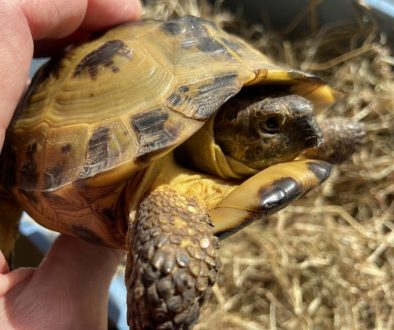
Start by watching the tortoise before picking it up. A well-kept animal is generally alert to its surroundings, moves with purpose when warm and awake, and reacts calmly but clearly when approached. Tortoises do sleep and rest, particularly if temperatures are low, so a quiet animal is not automatically unwell. The question is whether it seems bright once it has warmed up.
Look carefully at the following points:
- Eyes: They should be clear, open and free from swelling, crusting or discharge. Sunken eyes can suggest dehydration, although a tortoise may close its eyes briefly when resting.
- Nose and breathing: The nostrils should be clean and dry. Bubbles, mucus, wheezing, clicking or open-mouth breathing can indicate a respiratory problem.
- Shell: It should feel firm and solid, with no soft areas, bad smell, wounds or deep damage. Mild uneven growth can occur, but severe pyramiding or a very soft shell needs investigation.
- Skin and limbs: Check for clean skin, strong-looking legs and no obvious lumps, raw patches or retained shed restricting the toes. The tortoise should be able to stand and walk evenly.
- Weight and body condition: A healthy tortoise should feel substantial for its size, without prominent hips or a hollow-looking appearance around the legs. Equally, a very overweight tortoise may have folds of fat around its limbs.
These checks are useful, but they are not a substitute for a full history. A tortoise can look presentable for a short time while still carrying problems caused by poor housing, incorrect diet or dehydration.
Look for natural movement and behaviour
When a tortoise is at its proper operating temperature, it should be capable of walking steadily and using all four legs. Watch for dragging of the back legs, a persistent limp, trembling, repeated falling over or a clear inability to right itself. These are warning signs that need an explanation from the seller and, in many cases, veterinary assessment.
Healthy behaviour varies by species and season. A Horsfield tortoise may be busy and determined, while a Hermann’s or Marginated tortoise may spend time basking before becoming active. Young tortoises can also be more cautious in unfamiliar surroundings. What you want to see is responsiveness: a tortoise that investigates food, moves away from disturbance or extends its head and legs normally.
Ask whether you can see it eating if practical. A good appetite is encouraging, particularly in a youngster, though one missed meal during transport or a change of surroundings is not unusual. Be cautious if a seller cannot explain what the tortoise has been eating, how often it is fed or whether it has been drinking and passing faeces normally.
A firm shell is good, but shape tells a story
The shell is often the first thing buyers notice, and rightly so. It should be hard, dry and clean, with a healthy-looking surface rather than damp, flaky or foul-smelling areas. Softness can be associated with inadequate UVB exposure, poor calcium balance, illness or very young growth, so it should never be dismissed without a proper explanation.
Growth lines between the scutes are normal, especially in growing tortoises. However, tall, cone-like scutes – known as pyramiding – can be a sign that husbandry has not been ideal. It is often linked to an unsuitable diet, dry conditions, insufficient space or incorrect temperatures. Slight irregularity does not always affect a tortoise’s quality of life, but marked pyramiding is worth discussing honestly before purchase.
Also inspect the underside, known as the plastron. It should not have soft patches, ulcers, damage or staining that smells unpleasant. A few superficial marks from normal outdoor living are different from active shell disease.
Check the mouth, nose and signs of hydration
Respiratory illness is one of the clearest concerns to rule out. A healthy tortoise breathes quietly through a clean nose. Persistent wetness around the nostrils, bubbles, a wheeze or stretching the neck to breathe are not normal signs to ignore.
If the tortoise opens its mouth during very warm weather or after exertion, that may be temporary. Regular open-mouth breathing is different and requires attention. The mouth itself should look clean, without thick saliva, yellow deposits or an unpleasant smell.
Hydration can be more difficult for a new owner to judge. Bright eyes, a normal posture and regular drinking or soaking are positive signs. Very sunken eyes, thick saliva or lethargy can suggest dehydration. Proper hydration begins with correct temperatures, a suitable diet and regular access to water, not just an occasional soak.
Ask where the tortoise came from and how it has been kept
A healthy tortoise should come with more than a reassuring photograph. Ask whether it is captive bred, what species it is, its approximate hatch date or age, what it has been fed, and how it has been housed. A knowledgeable specialist should be happy to discuss heat, UVB, diet, enclosure size and seasonal care in plain English.
For UK buyers, legality is part of responsible purchasing. Certain tortoise species are covered by CITES controls and may require specimen-specific Article 10 certification before they can be sold legally. Where required, a tortoise may also be microchipped. You should receive the correct paperwork for the individual animal, and keep it safely for its lifetime.
Be wary of vague descriptions, sellers who cannot identify the species with confidence, or anyone who treats paperwork as an afterthought. A cheap tortoise without a clear history can become an expensive and distressing problem later.
The seller’s standards matter as much as the tortoise
The environment where a tortoise is raised gives useful clues about its care. Enclosures should be clean, dry where appropriate, safely heated and fitted with suitable lighting. There should be fresh water, appropriate food and enough room for the animals to move away from heat if needed. Overcrowding, dirty conditions and mixed groups of sick-looking animals are reasons to walk away.
For animals supplied by a specialist and delivered by an authorised animal courier, you may not always view the tortoise in person beforehand. In that case, ask direct questions before ordering. A responsible seller can explain the tortoise’s condition, feeding routine, age range, documentation and the preparation needed at home before delivery.
At Tortoises 4 You, our approach is to provide captive-bred tortoises with clear legal documentation where required, alongside free, friendly husbandry advice. Preparing the enclosure before the tortoise arrives is just as important as choosing the right animal.
Do not confuse a healthy tortoise with an easy tortoise
A bright, well-grown tortoise still needs the correct conditions every day. Species differ in their needs. A Horsfield tortoise has different natural behaviours and seasonal requirements from a Hermann’s or Marginated tortoise. Diet, UVB provision, basking temperatures, outdoor access and hibernation planning should all be suited to the species, age and individual animal.
This is why asking questions before purchase is sensible, not fussy. A good seller will want to know that you have suitable accommodation ready and will explain the points that apply to your chosen species. Careful preparation reduces avoidable health problems and helps the tortoise settle more calmly.
When to walk away
Do not buy a tortoise because you feel sorry for it or because it is offered at a tempting price. Walk away if it has obvious discharge, laboured breathing, a soft or infected shell, severe weakness, visible injuries, poor body condition or missing legal paperwork. The same applies if the seller will not answer basic questions about its origin and care.
Even with careful checks, no seller can promise that a living animal will never become ill. What responsible buying can do is greatly reduce the risk. Choose a bright, well-maintained captive-bred tortoise from a seller who understands the species, keeps proper records and remains available for practical advice. That first careful decision is one of the kindest things you can do for the tortoise you bring home.