Tortoise Buying Checklist UK for New Owners
A tortoise can be in your family long after a puppy or kitten has grown old. That is why a proper tortoise buying checklist UK buyers can use should begin before you choose a colour, size or species. The right tortoise is a healthy, captive-bred animal from a knowledgeable seller, but it also needs the right home, equipment and commitment from day one.
Buying on impulse because a small tortoise looks easy to keep is one of the most common mistakes. They are fascinating, rewarding animals, but they need daily care, correct heat and lighting, a varied weed-based diet and secure accommodation for decades. Taking a little time now makes for a far better start for both you and your tortoise.
Tortoise buying checklist UK: start with the species
Not every garden tortoise suits every household. The species you choose affects adult size, personality, housing needs and how much space you will need as your tortoise grows.
Horsfield tortoises are popular because they remain relatively compact and have plenty of character. They are enthusiastic diggers, so their outdoor enclosure needs secure underground protection as well as safe sides and a covered area. Hermann’s tortoises are also well suited to committed keepers and are available in different forms, including the smaller Western Dwarf Hermann’s. Marginated tortoises grow larger and need more room, but are a wonderful choice where the right space is available.
Do not choose solely on the price of the tortoise or how small it is at purchase. Ask how large the species is likely to become, whether it is suitable for a first-time keeper, and what its likely lifespan will be. A specialist should discuss this openly, rather than simply steer you towards what happens to be available.
Check that the tortoise is captive bred and healthy
A healthy captive-bred tortoise gives you the best foundation for responsible ownership. Captive breeding supports better welfare, traceability and legal trade. Be cautious of vague adverts, sellers who cannot answer basic husbandry questions, or animals advertised without clear information about their origin.
Before buying, ask about the tortoise’s age, hatch date where known, species and current routine. You should be told what it has been eating, the temperatures it has been kept at, whether it has been hibernated, and how it is being housed. This helps you avoid making sudden changes when it arrives.
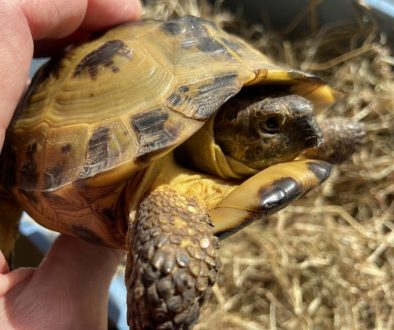
A well-cared-for tortoise should be alert and able to walk steadily. Its eyes should be clean and open, with no bubbling or discharge from the nose. The shell should be firm, with no soft areas or obvious damage, and the animal should not look thin, weak or dehydrated. Young tortoises do sleep and rest, so do not judge one moment in isolation, but a reputable seller will be happy to discuss its condition and care.
Make the enclosure ready before delivery day
The tortoise should not arrive before its indoor set-up is working properly. A box with a heat mat and a bowl of lettuce is not suitable. Tortoises need a temperature gradient, a quality UVB source, a basking area, a safe substrate, shelter, fresh water and enough room to move around naturally.
An indoor enclosure is particularly necessary for young tortoises and during the colder parts of the British year. Heat mats alone are not a substitute for overhead basking heat and UVB lighting. The correct equipment allows your tortoise to warm up, cool down and benefit from light in a controlled way.
Outdoor time is valuable when weather conditions are suitable, but a garden is not automatically a tortoise enclosure. A tortoise can disappear under a fence, dig out, be injured by a dog or become vulnerable to foxes and birds. Build or buy a secure, predator-proof run with a dry hide and access to shade. Avoid treated timber, toxic plants, slug pellets and areas where chemicals have been used.
Before you pay for your tortoise, make sure you have these essentials in place:
- A suitably sized indoor table or enclosure, with safe sides and adequate ventilation.
- A thermostat-controlled basking lamp and appropriate UVB lighting, checked and fitted correctly.
- A digital thermometer to monitor both the basking end and the cooler end.
- Safe substrate, a shallow water dish, a hide and feeding slate or tile.
- A secure outdoor enclosure for suitable weather, with protection from escape and predators.
- A reliable supply of suitable fresh food and a reptile-experienced veterinary practice within reach.
Equipment requirements vary with age, species and the season. If you are unsure about sizes, lamp fittings or temperatures, ask before purchasing. Free, friendly advice is most useful before a problem develops.
Understand food, hydration and daily care
Garden tortoises are not lettuce-only pets. Their diet should be based mainly on a varied selection of suitable weeds and leafy plants, with calcium provided as advised. Dandelion, plantain, sow thistle and certain safe leaves can all play a part, but variety matters. Fruit should not form a normal part of the diet for the Mediterranean species commonly kept in the UK.
Young tortoises usually need regular soaking and close observation, especially while they are settling in. Fresh water should always be available in a shallow dish that the tortoise can enter and leave safely. Weighing your tortoise regularly is a sensible habit, as gradual weight changes can reveal an issue before outward signs are obvious.
Daily care is not difficult once the routine is established, but it cannot be skipped for weekends away or busy school holidays. Someone competent must check heat, lighting, food and the tortoise itself every day. Think about who will care for it when you are away before you bring it home.
Ask about paperwork and UK legal requirements
Legal paperwork is not an optional extra. The documents required depend on the species and the individual tortoise. Certain protected tortoises require a specimen-specific Article 10 certificate for legal commercial sale in Great Britain. Where required, a tortoise may also be microchipped once it is large enough for this to be done safely.
Ask the seller exactly what paperwork comes with the tortoise and keep the original documents somewhere safe. Check that the details match the animal you are buying, including species, identifying information and any microchip number. If you later sell, transfer or breed from a protected tortoise, legal requirements can apply, so retaining a clear history matters.
A responsible specialist will explain the position in plain English and will not treat documentation as an afterthought. At Tortoises 4 You, the focus is on captive-bred tortoises, correct paperwork where applicable and practical support from people with 44 years of experience.
Consider delivery, collection and the first week
If you are having a tortoise delivered, ask how and when it will travel. A registered animal courier is very different from ordinary parcel post. Arrange to be at home, have the enclosure warmed and tested in advance, and avoid booking delivery for a day when the house will be empty or unusually cold.
When your tortoise arrives, place it gently into its prepared enclosure and allow it time to settle. It may not eat immediately after travelling, and that does not automatically mean something is wrong. Offer suitable food, fresh water and a warm, quiet environment. Avoid excessive handling in the first few days, particularly with young animals.
Keep an eye on activity, appetite, temperature and droppings, but do not continually disturb your new pet. If anything concerns you, contact the seller promptly for advice rather than relying on conflicting social media suggestions.
Be honest about the long-term commitment
A tortoise is not a short-term children’s pet. Children can enjoy helping with feeding and observing it, but an adult must remain responsible for the heating, cleaning, diet, vet care and legal records. Your tortoise may outlive changes of home, school, work and family circumstances.
Budget for electricity, replacement UVB tubes or lamps, food, enclosure improvements and veterinary treatment, not just the initial purchase. A tiny hatchling will need more space as it grows, and an outdoor enclosure may need adapting as your confidence and the tortoise’s size increase. Hibernation is another area where careful, species-specific advice is essential. It is not a routine to attempt simply because you have read that tortoises hibernate.
The best time to ask questions is before you buy. Speak to a specialist, prepare the enclosure properly and choose the species that fits your space and lifestyle. Then, when your tortoise arrives, you can spend those first quiet days getting to know a healthy animal in a home that is ready for it.