Best Tortoise for Beginners in the UK
Choosing your first tortoise usually comes down to one question – what is the best tortoise for beginners? The honest answer is that there is no single perfect species for every home. The right choice depends on your space, your budget, how confident you feel with heating and lighting, and whether you want a smaller, steady-going tortoise or one that will need more room as it grows.
For most first-time keepers in the UK, the best beginner species are Mediterranean tortoises that stay a manageable size and do well with straightforward, consistent care. That is why species such as the Horsfield tortoise and Hermann’s tortoise are so often recommended. They are well known, widely kept, and their needs are understood properly. That matters a great deal when you are starting out.
What makes the best tortoise for beginners?
A beginner-friendly tortoise is not one that needs no work. All tortoises need correct heat, proper UVB lighting, the right diet, regular bathing when young, and secure accommodation. What makes a species suitable for a first-time owner is that its care is predictable, its adult size is reasonable, and it adapts well to the sort of garden and indoor set-up many UK keepers can provide.
Temperament helps too. Some species are naturally more active and hardy, while others can be more sensitive if husbandry is even slightly off. Availability also matters. Captive-bred tortoises from an established specialist are a far safer starting point than taking on an unknown animal with no history, poor paperwork, or long-standing care problems.
For beginners, it is usually best to avoid choosing purely on appearance. A very small baby tortoise may look easier, but youngsters need careful daily attention. A rarer species may seem more appealing, but it can come with more specific needs or less straightforward support. Your first tortoise should be one you can keep correctly for the long term.
Best tortoise for beginners – the main species to consider
Horsfield tortoise
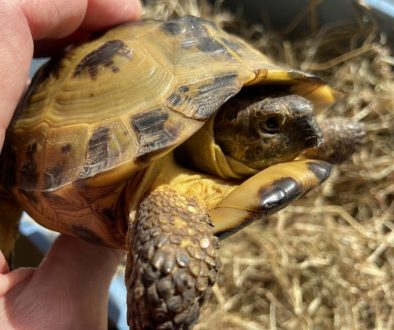
The Horsfield tortoise, also known as the Russian tortoise, is often one of the strongest choices for a new keeper. It stays relatively compact, has a good reputation for being hardy when kept correctly, and is generally active and characterful.
This species suits people who want a tortoise with plenty of personality. Horsfields often spend time exploring, digging and grazing, so they can be very rewarding to watch. They are also a sensible size for many homes and gardens in England and Wales.
The trade-off is that they are burrowers. That means their enclosure must be secure, especially outdoors. If the garden set-up is not built properly, a Horsfield can quickly find a weak point. They also need dry, warm conditions rather than damp surroundings. In a British climate, that means paying attention to shelter and avoiding wet, cold ground for long periods.
Hermann’s tortoise
If a customer asks for a calm, dependable first tortoise, Hermann’s tortoise is very often high on the list. This is one of the most popular beginner species for good reason. Hermann’s tend to stay manageable in size, they are attractive, and their care needs are well established.
They are generally a very sensible all-round choice for families and first-time keepers. With correct heat, lighting, diet and outdoor time in suitable weather, they settle well and make excellent long-term pets.
There are legal points to be aware of with Hermann’s tortoises, as they are a protected species. In practice, this simply means buying from a proper specialist who provides the correct documentation. If required, that may include specimen-specific Article 10 paperwork and microchipping once the tortoise reaches the relevant size. Done properly, this is straightforward, but it is one more reason to avoid informal sellers.
Western Dwarf Hermann’s tortoise
The Western Dwarf Hermann’s is a smaller and rarer form, and many people are drawn to it because of its size. For some homes, that can make it feel like the best tortoise for beginners, especially if space is limited.
Smaller size can be an advantage, but it should not be the only deciding factor. Because this is a more specialist tortoise, availability is lower and buyers should expect to pay more. As with standard Hermann’s, correct legal paperwork is essential.
For the right buyer, this can be an excellent first tortoise, but it is usually better suited to someone who already knows they want this specific type and is happy to follow proper guidance closely rather than someone making a quick decision based on size alone.
Marginated tortoise
Marginated tortoises are impressive animals, but they are not usually the first species we would point a complete beginner towards. They can make very good pets, and many keepers enjoy them enormously, but they grow larger than Horsfields or Hermann’s and need more space as adults.
That is the point many new owners underestimate. A small juvenile does not stay small. If you are planning ahead properly and have the room, a Marginated may still be a realistic option. If space is tight, or you want the easiest route into tortoise keeping, one of the smaller Mediterranean species is usually the better fit.
Which species is usually the safest choice?
For most UK homes, the safest answer is either a Horsfield tortoise or a Hermann’s tortoise. Both are well suited to first-time keepers when bought captive-bred and kept with the right husbandry from day one.
If you want a slightly more rugged, active tortoise and can provide a secure enclosure with dry conditions, a Horsfield is often an excellent choice. If you want a classic Mediterranean tortoise with very well understood care requirements and a steady reputation as a family favourite, Hermann’s is hard to beat.
There is no point pretending one species is always better than the other. It depends on your set-up and what sort of tortoise appeals to you. Good advice before purchase matters more than following a generic list online.
Things beginners often get wrong
The biggest mistake is thinking tortoises are simple, low-maintenance pets. They are quiet and clean compared with many animals, but their environment must be correct every day. Poor heating, weak UVB, supermarket salad diets, and unsuitable indoor tables still cause avoidable problems.
Another common error is choosing by price alone. A cheap tortoise with doubtful origins can become expensive and upsetting very quickly. Health, legality and proper support matter far more. A healthy captive-bred tortoise from a reputable, experienced seller gives you a much better start.
People also tend to underestimate lifespan. A tortoise is not a short-term pet for the children. It is a long-term commitment that may stay with the family for decades. That should be part of the decision from the start.
What to look for when buying your first tortoise
First, make sure the tortoise is captive-bred. That is better for welfare, better for health, and better for responsible ownership. You should also expect clear advice on heating, lighting, feeding, bathing, supplements and accommodation before the tortoise arrives.
If the species is protected, the paperwork must be correct. That includes CITES compliance and, where required, specimen-specific Article 10 certification. A proper specialist will explain what applies to your tortoise in plain English. You should never be left guessing about the legal side.
Ask practical questions. What size enclosure will be needed now, and later? Can the species live outdoors safely in the warmer months? How often should a youngster be bathed? What weeds and plants are suitable? A seller with real experience should be comfortable talking through all of this.
That is where dealing with a specialist makes a real difference. At Tortoises 4 You, for example, the advice side matters as much as the sale itself. For a beginner, that sort of support can save a lot of uncertainty.
Is a tortoise the right first reptile?
Often, yes – but only if you want a pet you can care for steadily over many years. Tortoises are not noisy, they do not need handling to thrive, and many owners enjoy the routine of feeding, bathing, maintaining the enclosure and seeing them graze outdoors in suitable weather.
They are less suitable if you want something very interactive, very cheap to set up, or easy to leave without planning. Heat and lighting cannot be an afterthought. Nor can diet. If you are happy to learn the basics properly, a tortoise can be a very rewarding first reptile.
Our honest view
If you want the simplest starting point, look first at a Horsfield tortoise or Hermann’s tortoise. Those are usually the best tortoises for beginners because they combine manageable size, known care requirements and good long-term suitability for many UK keepers.
The key is not just choosing the right species. It is starting with a healthy captive-bred tortoise, the correct documents where needed, and straightforward guidance you can rely on. Get those things right at the beginning, and keeping your first tortoise becomes far more enjoyable and far less confusing.
A good first tortoise should give you confidence, not worry. If you take the time to choose properly, you will be setting up both yourself and the tortoise for a much better life together.