How to Choose a Pet Tortoise for Your Home
A tortoise may look like a small, quiet pet, but the decision is a long-term one. Many garden tortoises live for decades, grow more than new keepers expect, and need purpose-built heat, lighting and outdoor space. Knowing how to choose a pet tortoise starts with being honest about the home, time and commitment you can offer – not simply choosing the smallest or cheapest animal.
The right tortoise should suit your household and your ability to provide correct care throughout its life. Buying captive-bred from a specialist, with the appropriate paperwork and practical husbandry support, gives both you and the tortoise the best possible start.
How to choose a pet tortoise: start with your space
A tortoise needs far more than a glass tank and a bowl of food. Garden species need room to walk, browse, bask and behave naturally. A secure outdoor enclosure is a major advantage in the British summer, provided it is dry, predator-proof and protected from escape. Tortoises are stronger and more determined than they appear, so boundaries need to be buried or built securely.
Indoors, especially during colder weather, a proper tortoise table or suitably designed enclosure is usually more appropriate than a vivarium. It must provide a warm basking area, a cooler end, safe UVB lighting, suitable substrate and enough floor space for the tortoise to move around. Heat mats are not an adequate primary heat source for most garden tortoises.
Think about the adult animal, not just the hatchling. A tiny youngster is appealing, but it will need increasing space as it grows. If you live in a flat with no access to a safe garden, some species may be less suitable, and you will need to plan particularly carefully for a generous indoor set-up and natural sunlight when conditions allow.
Choose a species that fits your household
The species makes a real difference to size, character, climate tolerance and care. There is no single “best” pet tortoise, but a few captive-bred garden species are particularly popular with UK keepers.
Horsfield tortoises
Horsfield tortoises are often chosen by first-time keepers because they remain relatively compact compared with some Mediterranean species. They are active, full of character and can be very engaging to watch. They are also enthusiastic diggers, so an outdoor enclosure needs secure sides and a protected base.
Their natural habitat is dry and seasonal, which means warmth, good drainage and avoiding damp conditions are essential in the UK. They are not a low-maintenance pet simply because they are small. Correct lighting, diet and a planned approach to winter care still matter greatly.
Hermann’s tortoises
Hermann’s tortoises are a popular choice for families who can provide the correct accommodation. They are attractive, generally manageable in size and well suited to a carefully managed indoor and outdoor routine. They do, however, require the same serious commitment to heat, UVB, diet and secure space as any other tortoise.
Hermann’s tortoises can live a very long time. A purchase made for a child should always be understood as a family responsibility, with an adult prepared to take over the care for decades if necessary.
Marginated tortoises
Marginated tortoises are usually larger and need more room than Horsfields or many Hermann’s tortoises. Their distinctive flared rear shell makes them especially striking, but their adult size means they are better suited to keepers with a larger, well-planned enclosure.
If you have a secure garden and can provide substantial indoor accommodation during poor weather, a Marginated tortoise can be an excellent choice. If available space is limited, a smaller species is often the kinder and more practical decision.
Western Dwarf Hermann’s tortoises
Western Dwarf Hermann’s tortoises are a rarer option and can be appealing to keepers looking for a smaller Hermann’s type. Their care still needs to be based on the individual animal and its species requirements, rather than an assumption that smaller means easier. Rarity should never be the reason to buy a tortoise. Welfare, suitability and lawful documentation come first.
Be realistic about time, cost and lifespan
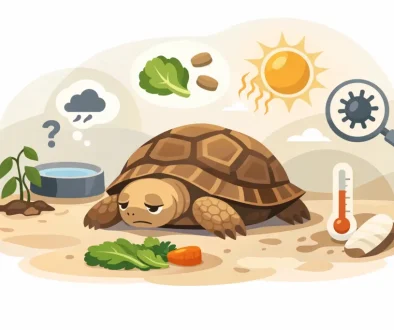
Tortoises do not need daily walks, but they do need daily care. Each day involves checking temperatures, lighting and activity, offering suitable food, removing old food, checking water and observing the animal’s health. Their enclosure also needs regular cleaning, while UVB lamps and heating equipment need replacing and monitoring.
The initial cost is only one part of ownership. A proper enclosure, thermostats, lighting, heating, substrate, security, outdoor housing and veterinary care should all be budgeted for before bringing a tortoise home. A reptile-experienced vet may not be on every high street, so it is sensible to identify one in your area in advance.
Their lifespan is the biggest consideration. With good care, a tortoise may be with you for several decades and could outlive the person who first wanted one. Have a clear plan for holidays, house moves, university, changing work patterns and any future family changes. A trusted, knowledgeable carer is far better than asking an inexperienced neighbour to manage specialist heating and feeding.
Diet is simple in principle, but needs consistency
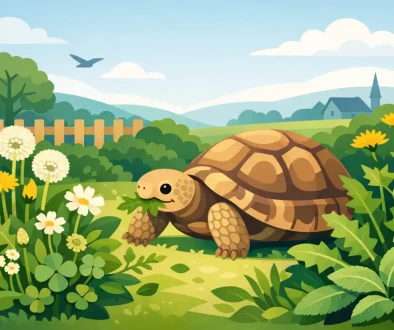
Most Mediterranean garden tortoises do best on a high-fibre, weed-led diet. Suitable foods commonly include dandelion, plantain, sow thistle, mallow and other safe leafy plants. Variety is useful, but the overall balance matters more than offering lots of supermarket fruit and salad.
Fruit should not form a regular part of the diet for these species. High-sugar foods and protein-rich foods can contribute to poor growth and long-term health problems. A tortoise should also have access to fresh water, even if you rarely see it drink.
Before buying, consider whether you have access to safe pesticide-free weeds, a suitable growing area or a reliable supply of appropriate foods. This is one of the practical questions that helps separate a well-planned purchase from an impulse buy.
Understand the legal paperwork before payment
Legal ownership is not an optional extra. In the UK, protected tortoise species may require specific documentation to demonstrate that they have been lawfully bred and sold. For certain species, this can include specimen-specific Article 10 certification, and microchipping may be required once an animal reaches the relevant size.
The exact requirements depend on the species and the individual tortoise. Ask what documents come with the animal, keep them safely for its lifetime and make sure any microchip details are recorded correctly. Paperwork should match the tortoise you are buying, not be a vague promise that documents will follow later.
A responsible seller will be clear about captive breeding, welfare and legal compliance. Avoid animals offered without proper provenance, especially through informal adverts or sellers who cannot answer basic questions about species, age, origin and documentation. A bargain can become a costly and distressing problem if the animal is unhealthy or cannot be legally transferred.
Ask the questions that reveal a responsible seller
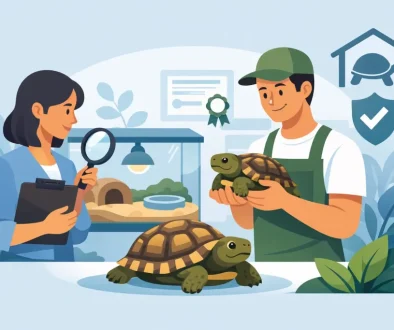
A specialist should welcome sensible questions before you reserve a tortoise. Ask about the animal’s species, date of birth or approximate age, current diet, housing temperatures, health checks and the documentation supplied. It is also reasonable to ask what aftercare advice is available once the tortoise arrives.
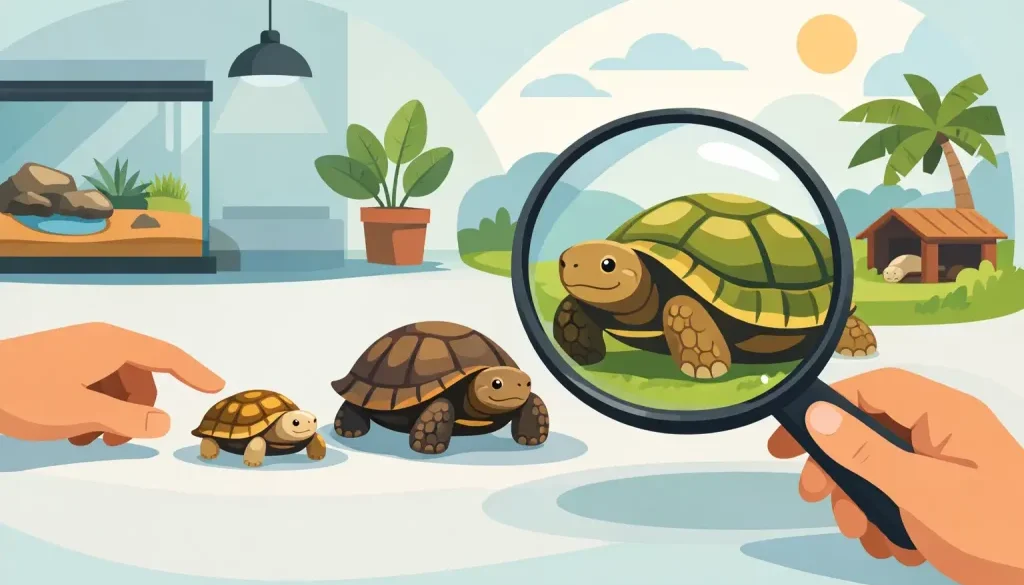
Look for a bright, alert tortoise with clear eyes, a clean nose and steady movement. Its shell should be firm and free from obvious damage. Young tortoises are naturally small, but they should not look weak, dehydrated or neglected. No seller can guarantee that a living animal will never become ill, but good captive breeding, correct rearing and transparent advice are meaningful signs of care.
If you are buying online, ask how delivery is arranged. Tortoises should be transported by an appropriate registered animal courier, with timing and weather considered carefully. You should know when to expect the animal and be available to receive it promptly.
Prepare the enclosure before your tortoise arrives
Do not wait until the tortoise is in the house to buy equipment. Set up the enclosure in advance and test temperatures at the basking area and cooler end over several days. Check that the UVB lamp is positioned at the correct safe distance, that bulbs are protected from contact, and that all electrical equipment is secure.
Have suitable food, fresh water, substrate and a safe hide ready from day one. The first few days should be quiet, with limited handling while the tortoise settles into its new environment. Children can be involved in feeding and observing, but adult supervision is essential. Tortoises are not toys, and frequent lifting can be stressful.
At Tortoises 4 You, the aim is to help prospective keepers make that decision before purchase, with straightforward species guidance and free, friendly husbandry advice. The best tortoise for your home is the one whose lifelong needs you can meet confidently, every season of the year.