What Paperwork Comes With a Pet Tortoise?
A healthy captive-bred tortoise should arrive with more than a carrier, a care sheet and a new name chosen by the family. The paperwork tells you where the animal came from, whether it can be sold legally and, for certain protected species, how to prove that it is yours to keep. When people ask, “what paperwork comes with tortoise purchases?”, the right answer depends on the species.
For a UK buyer, the key point is simple: paperwork is not an optional extra or something to put in a drawer and forget. Keep every document safely from the day your tortoise arrives. It protects you if you later move home, need veterinary care, insure the tortoise, or wish to rehome or sell it in accordance with the law.
What paperwork comes with a tortoise in the UK?
A reputable specialist will normally provide an invoice or receipt confirming the purchase, along with clear husbandry information. The invoice should identify the seller, the date of sale, the species purchased and, where relevant, the individual animal’s identifying details.
You should also receive care guidance suitable for that particular tortoise. A Horsfield, Hermann’s and Marginated tortoise may all look like straightforward garden tortoises, but their requirements for heat, lighting, diet, hibernation and outdoor access are not identical. Good paperwork and advice should help you begin correctly rather than leave you relying on guesswork.
For species covered by the strictest CITES controls, the most significant document is an original Article 10 certificate. This is the document buyers most often hear about, and it is the one that must be treated with particular care.
Your sales invoice or receipt
Keep the sales invoice for the life of the tortoise. It provides a useful record of lawful purchase and should be stored with any certificate rather than separately. If a tortoise is microchipped, make sure the chip number on the invoice matches the number on its certificate and any accompanying records.
An invoice is not a replacement for an Article 10 certificate where one is required. Equally, an Article 10 certificate does not replace the value of a clear sales record. Keep both.
Care and welfare information
Responsible sellers provide practical information on setting up the enclosure, safe temperatures, UVB lighting, suitable weeds and leafy foods, bathing, weighing and seasonal care. This is not legal paperwork, but it matters greatly. Many avoidable health problems start in the first few weeks, often because a young tortoise is kept too cool or offered an unsuitable diet.
A specialist should also be available to explain anything you are unsure about. Forty-four years of experience has taught us that a brief conversation before delivery can prevent a great deal of confusion later.
When is an Article 10 certificate needed?
An Article 10 certificate is required for the commercial sale, purchase, advertising or other commercial use of live tortoises listed in Annex A of the retained UK wildlife trade regulations. This generally includes Hermann’s tortoises, Marginated tortoises and Western Dwarf Hermann’s tortoises offered for sale in the UK.
The certificate confirms that the particular animal can be used commercially and is legally available for sale. It is issued for the specimen, not simply for a whole clutch or a general species type. For that reason, the details need to match the tortoise in front of you.
Many Annex A tortoises are identified by a microchip once they are large enough for this to be done safely. The chip number is usually recorded on the Article 10 certificate. In some circumstances, especially for very small young tortoises, another approved form of identification or an exemption may apply until microchipping is suitable. The certificate itself will show the relevant information and conditions.
Do not accept a photocopy as a substitute for the original certificate. Keep the original in a dry, secure place and retain a scanned copy for your own records. If you pass the tortoise to another keeper in a legal sale or transfer, the original documentation must be dealt with correctly as part of that process.
Why the certificate is specimen-specific
Two Hermann’s tortoises can be the same age, look very similar and come from the same breeder, yet their paperwork cannot simply be swapped. A specimen-specific certificate is linked to one animal through its details, identification and certificate number.
Before accepting the tortoise, check that the species name, identification details and any microchip number correspond with the animal and the seller’s invoice. If something does not match, ask before the sale is completed. A dependable seller will welcome the question and resolve any error promptly.
The conditions printed on the certificate matter as well. Read them, even if the document looks technical. Certain changes, such as a transfer, loss, death or changes to the details recorded for the specimen, may need to be reported to the relevant authority. Follow the instructions on your individual certificate rather than relying on a friend’s experience with a different tortoise.
What about Horsfield tortoise paperwork?
Horsfield tortoises are commonly kept in the UK and are regulated under CITES, but they do not normally require an Article 10 certificate for sale in the same way as Annex A species. That does not mean no records are needed or that the source is unimportant.
You should still receive a proper invoice showing that you bought the animal from a legitimate supplier. Ask whether the tortoise is captive-bred, and retain any provenance information provided. Captive-bred tortoises are the responsible choice for pet homes because their history is clearer and they have not been taken from wild populations.
There can be exceptions and changes in regulation, particularly where an animal has unusual origin or documentation. If you are ever unsure, ask the seller before committing to a purchase. Buying first and asking for proof later is the wrong way round.
Paperwork you should check before delivery
If you are buying remotely, it is sensible to confirm the paperwork arrangements before a delivery date is booked. Ask which documents will accompany the tortoise and whether an original Article 10 certificate applies to your chosen species.
For an Annex A tortoise, confirm that the certificate is original, specimen-specific and supplied with the animal. Check whether the tortoise is microchipped and, if so, ask for the chip number to be recorded correctly. You may also wish to ask how the documents will be packed so they are not damaged during transport.
A registered animal courier should transport the tortoise safely, but legal paperwork should not be left to chance. On arrival, check the tortoise calmly, then check the documents while the details of the delivery are fresh. Put them straight into a labelled folder or waterproof document wallet.
What paperwork should you keep after purchase?
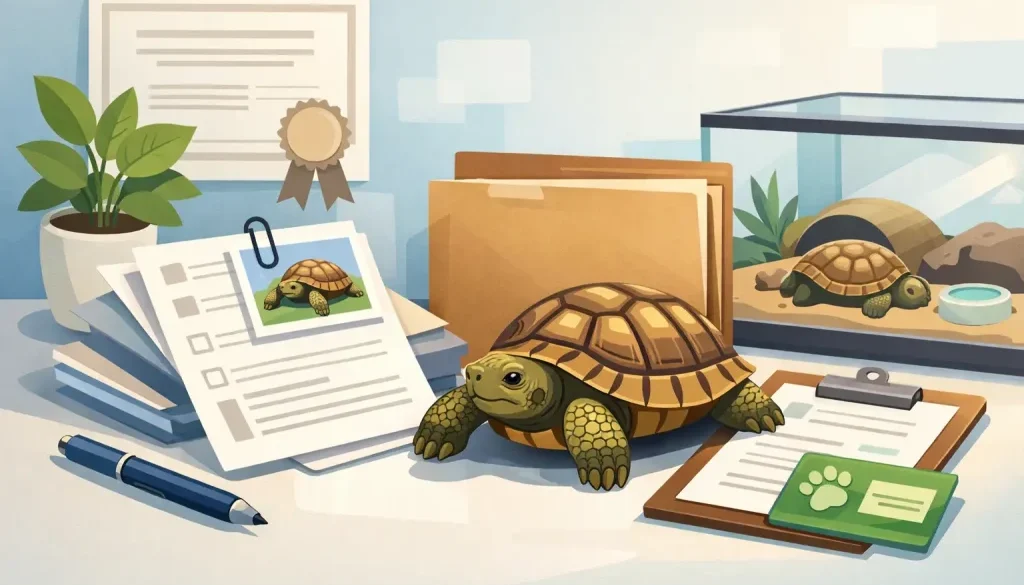
Keep a simple lifetime file for your tortoise. Alongside the original certificate, where applicable, store the invoice, any breeder or origin details, microchip information, veterinary reports and records of weight or treatment. This is especially useful if a vet needs a history, if the animal goes missing, or if you need to establish its identity years later.
It is also wise to photograph your tortoise from above and underneath once or twice a year. Shell markings change gradually, but a clear photographic record can support identification. This is helpful for every species, including those without a microchip.
If your tortoise dies, is lost or is rehomed, do not throw the paperwork away immediately. Check the conditions of any Article 10 certificate and take advice on the correct next step. The document may need to be returned or the relevant authority notified.
Be cautious of missing paperwork
A low price can look tempting, particularly when a family has already decided that a tortoise is the pet for them. However, a protected tortoise offered without the required paperwork is not a bargain. It can leave the buyer with an animal they cannot legally sell, advertise or transfer, as well as uncertainty about its origin and welfare.
Be equally wary of vague claims such as “papers available later”, certificates that describe a different species, or paperwork with details that do not match the tortoise. A legitimate sale should be clear from the outset. You deserve to know exactly what you are buying and to receive the documents needed to keep it with confidence.
Choose your tortoise carefully, ask direct questions and keep its records safe. The right paperwork is part of responsible ownership, just like a suitable enclosure, proper lighting and a lifetime commitment to good care.